

EmberMesh®
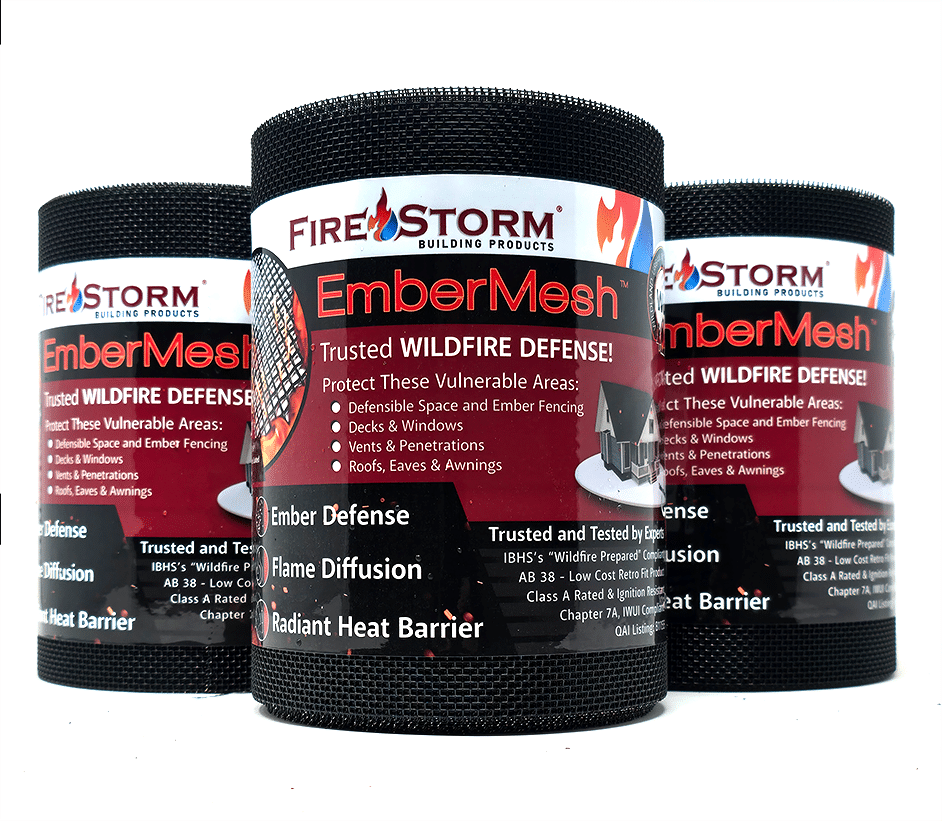
EmberMesh by FireStorm® protects buildings & infrastructure against ember attacks and radiant heat. Ember attacks account for up to 90% of buildings lost during a wildfire. EmberMesh stops embers from entering gaps and reflects radiant heat caused by fires. Also available in vents for wildfire defense.
EmberMesh is a wildfire-rated barrier designed to block wind-blown embers, the leading cause of home ignition during wildfires. Ember defense is a critical part your wildfire defense strategy. Ember mesh helps protect vents, eaves, crawlspaces, and other vulnerable openings where embers are most likely to enter, supporting safer, more resilient exterior assemblies.
Mesh Applications


WUI & IWUI Compliant

Chapter 7A Compliant*
Class-A Rating
Ignition Resistance Rated
Tested for Ember and Flame* Impingement
Easy Retrofitting & Variable Usage
Specifications, Certification, and Testing Standards
EmberVent™ and EmberMesh™ are rigorously tested and certified to meet the highest standards for fire resistance and safety. These products have been evaluated to ASTM E2886, ASTM E84, and ASTM E2768 testing standards, ensuring their durability and effectiveness in wildfire defense. Additionally, our vents are compliant with IBHS’s “Wildfire Prepared Home” program and approved for use under California’s Chapter 7A building code in most orientations, as well as other state IWUI requirements. With FireStorm®, you can trust that your home is protected by solutions that exceed industry standards for performance and reliability.
* While FireStorm® EmberVent™ and EmberMesh™ are approved for vertical installations under California’s Chapter 7A building code, certain horizontal applications may require materials beyond mesh-only solutions. Please consult your local building codes and regulations to ensure compliance with all installation requirements.
* Be advised, we do not recommend a mesh only product when extreme heat and flame defense is desired.
Check out the EmberMesh™ product specs and download the Spec Sheet to find everything you need to know.
FireStorm® EmberMesh™ Specs
Standard Test Method for Extended Duration Surface Burning Characteristics of Building Materials [QAI Listing: B1155]
Evaluating the Ability of Exterior Vents to Resist the Entry of Embers and Direct Flames Impingement [QAI Listing: B1155]
Fire Test on Non-Mechanical Dampers Used in Vented Construction [QAI Listing: B1155] *Not recommended for flame defense
EmberMesh™ and EmberVent™ meet the requirements of the California Building Code, Chapter 7A – 706A2 when installed in a vertical orientation.*
EmberMesh™ and EmberVent™ meet the requirements of the California Building Code, Chapter 7A – 706A2.1
Ignition Resistant Building Material
Minimum standards for the location, design, and construction of buildings and structures based on fire hazard severity in the wildland-urban interface.
EmberMesh™ and EmberVent™ meets or exceeds the following 2024 IWUIC.
FireStorm™ EmberMesh™ I-WUI
504.10.2 Prescriptive
505.10.2 Prescriptive
Quality Materials
EmberMesh™ is made out of 304 Stainless Steel making it the best choice for those who want a durable material.
Built to Resist Wildfires
EmberMesh™ is designed for defense! It is resistant to flames, embers, and corrosion, and is able to withstand exposure to the elements without degrading or breaking down.
98% Ember Blockage
EmberMesh™ is designed with a small aperture to keep embers out, including debris.
The small aperture size prevents embers from passing through the mesh, which is a major concern for those who live in W.U.I areas.
EmberMesh™ Installation
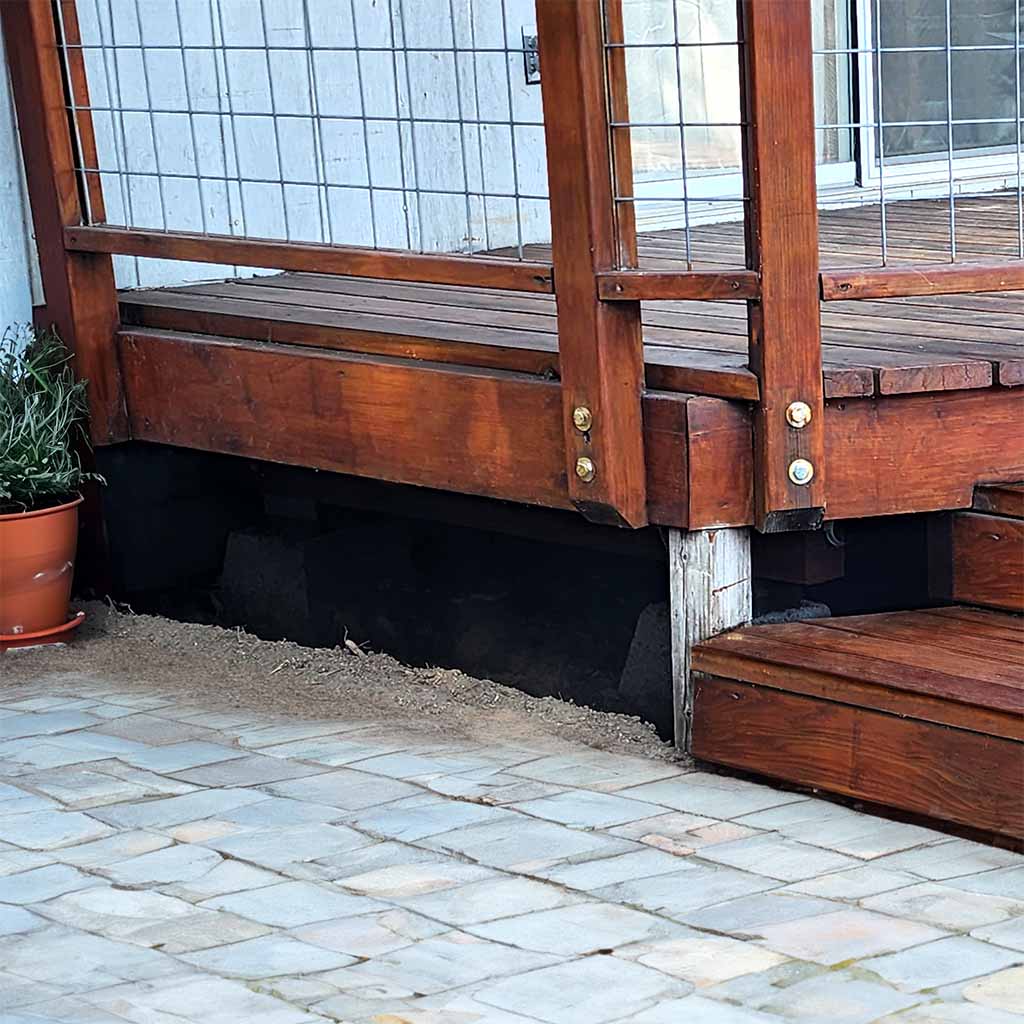
EmberMesh™ is extremely versatile. It may be used to protect nearly every opening on a home that could allow for ember penetration, including skirting for decks and ember fencing around your property.
Ember Fencing and Decking
Measure the Perimeter
Measure your perimeter ensuring that you have a proper mounting surface along the entire span of the area to be protected, ensuring that your fastener spacing is no greater than 6”- 8”. It’s recommended to leave a 2” tail on each edge of your EmberMesh™ run to ensure ample material to fasten to your framing and supports.
Securing the Bottom Edge
If no mounting surface is present along your span, we recommend digging a small trench approx. 6” deep along the span to be protected. Bend 2” of the bottom edge of our EmberMesh™ at 90 degrees. This edge should be facing towards you during the installation. Burry the edge along the span and firmly pack in the dug up material.
Verticals
Our EmberMesh™ should be fastened along each upright along your span, as well as along the top edge, ensuring that your fastener spacing does not exceed 6” 8”.
Securing the Top Edge
For decks and framed fencing, fasten this edge with fasteners every 6” – 8”. If no vertical mounting is available, you may follow the same premise as the “bottom edge” and bend 2” of your top edge at 90 degrees facing toward you during installation. Fasten this 90 edge to the underside of your horizontal supports that run along your span.

Retro-fitting Vents
Installing from the front
Measure the existing opening of your vent. Cut our EmberMesh™ 2” wider and 2” taller than your existing ventilation opening. This ensures that there is ample room to fasten our mesh to your siding leaving no gaps.
Installing from the back
If you have access to the back side of your existing vent, you can follow the same steps as above, provided that you have a consistent mounting surface on the back side of your existing vent, such as its framing.
Vulnerable Areas to Use EmberMesh™
Frequently Asked Questions About EmberMesh™
What is EmberMesh™, and how does it help protect homes during wildfires?
EmberMesh™ is a fine, fire-resistant metal screen designed to block wind-driven embers from entering vulnerable openings in a home. During wildfires, embers can travel ahead of flames and ignite structures from the inside through vents, eaves, and gaps.
By acting as a passive physical barrier, EmberMesh™ reduces this ignition risk and supports broader home hardening strategies. When used correctly, EmberMesh™ becomes an important layer within a complete wildfire defense mesh system.
Is EmberMesh™ considered fire-resistant or fire-rated?
EmberMesh™ is designed to be fire-resistant, meaning it can withstand heat exposure and does not readily ignite or melt when exposed to embers. However, being fire-resistant is different from being fire-rated, which refers to specific, standardized flame-spread or burn-through testing under full fire conditions.
Fire resistant mesh is typically evaluated through material performance testing, including ASTM standards, to ensure durability during ember exposure. EmberMesh™ focuses on ember blocking rather than full flame containment.
Can EmberMesh™ be used as vent mesh or for retrofitting vents?
Yes, EmberMesh™ can be used as vent mesh when retrofitting existing vents, eave openings, crawlspace vents, and similar penetrations. It is commonly installed as mesh vent covers or behind existing grilles to improve ember resistance without replacing the entire vent assembly.
Proper installation is critical to ensure the mesh is securely fastened, maintains airflow, and does not create gaps where embers could bypass protection. For some jurisdictions, listed ember-resistant vents may still be required by code.
How does mesh size affect ember blocking performance?
Mesh size plays a significant role in how effectively embers are blocked. Fine-mesh screens with smaller openings reduce the likelihood that embers can pass through and lodge in wall cavities or attics.
Many ember protection systems use 16-mesh or finer configurations to improve screening effectiveness while still allowing airflow. The goal is to balance ember blocking with moisture control and ventilation performance, ensuring protection does not compromise building health.
What’s the difference between EmberMesh™ and standard fire screen or wire mesh?
Standard fire-screen mesh or basic wire mesh is often designed for insect control or debris screening, not for wildfire exposure. These materials may warp, corrode, or fail when exposed to sustained heat and ember contact.
EmberMesh™ is manufactured from fire-resistant metals that maintain structural integrity during ember storms, providing more reliable protection. Using non-rated screens can leave openings vulnerable, even when they appear visually covered, limiting their effectiveness in wildfire defense applications.
Is EmberMesh™ enough on its own for wildfire protection?
EmberMesh™ is an important layer of defense, but it works best as part of a system-based home hardening approach. Effective wildfire protection also includes ember-resistant vents, fire-rated gutter guards, defensible-space landscaping, and routine debris removal.
Wildfire defense mesh supports code-aligned mitigation strategies, but no single product can eliminate risk on its own. Coordinated upgrades across the exterior envelope provide the strongest protection.
Let’s Build a Safer Future!
Give us a call or submit your information via the form and a team member will get back to you.


