

FireStorm® Gutter Guards
FireStorm® Gutter Guards were designed to protect homes from the danger of embers! It’s estimated that up to 90% of buildings lost in a wildfire are due to ember attacks. FireStorm® Gutter Guards prevent this by acting as a shield, keeping embers and flammable debris out!
Ember intrusion is a major cause of homes being destroyed in a wildfire, as burning embers can easily ignite flammable debris that may have accumulated in gutters.
FireStorm® Gutter Guard plays an important role in reducing the risk of ember intrusion by keeping flammable debris out of gutters; eliminating a potential fuel source for a fire.


Specifications, Certification, and Testing Standards
FireStorm® Gutter Guards are engineered to meet the highest safety and performance criteria. They have undergone rigorous testing and are certified under ASTM E84 and ASTM E2768 standards, achieving a Class A Fire Rating and Ignition-Resistant status. These certifications confirm the product’s superior fire resistance and surface burning characteristics. Additionally, FireStorm® Gutter Guards comply with California’s Chapter 7A building code and are Wildland-Urban Interface (WUI) compliant, ensuring they meet stringent requirements for use in fire-prone areas. By choosing FireStorm® Gutter Guards, you’re investing in a product that not only meets but exceeds industry standards for fire safety and durability.
* While FireStorm Ember Vents and Ember Mesh are approved for vertical installations under California’s Chapter 7A building code, certain horizontal applications may require materials beyond mesh-only solutions. Please consult your local building codes and regulations to ensure compliance with all installation requirements.
Check out the FireStorm® Gutter Guard product specs and download the Spec Sheet to find everything you need to know.
FireStorm™ Gutter Guards Specs
FireStorm® Gutter Guards are designed to protect homes from the danger of embers! It’s estimated that up to 90% of buildings lost in a wildfire are due to ember attacks. FireStorm® Gutter Guards prevent this by acting as a shield, keeping embers and flammable debris out!
FireStorm® Gutter Guards play an important role in reducing the risk of ember intrusion by keeping flammable debris out of gutters, eliminating a potential fuel source for a devastating house fire.

Surface Burning Characteristics of Building Materials
Standard Test Method for Extended Duration Surface Burning Characteristics of Building Materials
Gutter and downspouts shall be constructed of noncombustible material. Gutters shall be provided with an approved means to prevent the accumulations of leaves and debris in the gutter.

Heavy Duty Rails
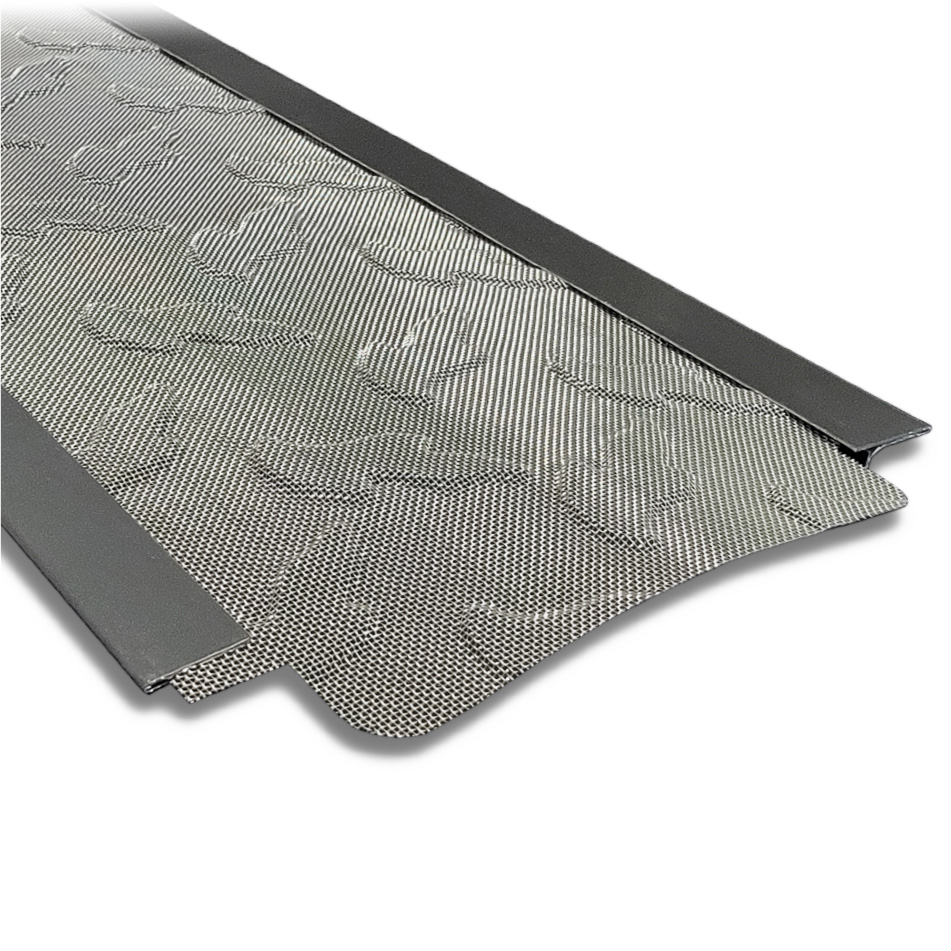
Our aluminum rail design allows for a lightweight but extremely durable gutter guard.
High Flow 3D Design
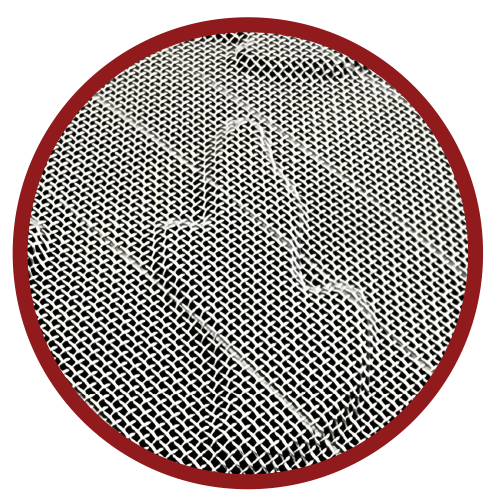
Our 3D stainless steel mesh breaks water surface tension, keeps water flwoing freely into the gutter, whild keeping debris out.

Stainless Steel Micro Mesh
Our stainless steel mesh provides a physical barrier for maximum protection against any debris including wildfire embers!
Heavy Duty Rails
The 3D Micro Mesh design breaks the water surface tension, which ensures that water can easily flow into the gutter, even during heavy downpour.
Extruding Pattern
Our Micro Mesh has an extruding pattern to lift up debris, such as leaves and twigs, allowing the debris to slip right off. This design helps to prevent clogs and blockages in the gutter guard.
Professional Grade
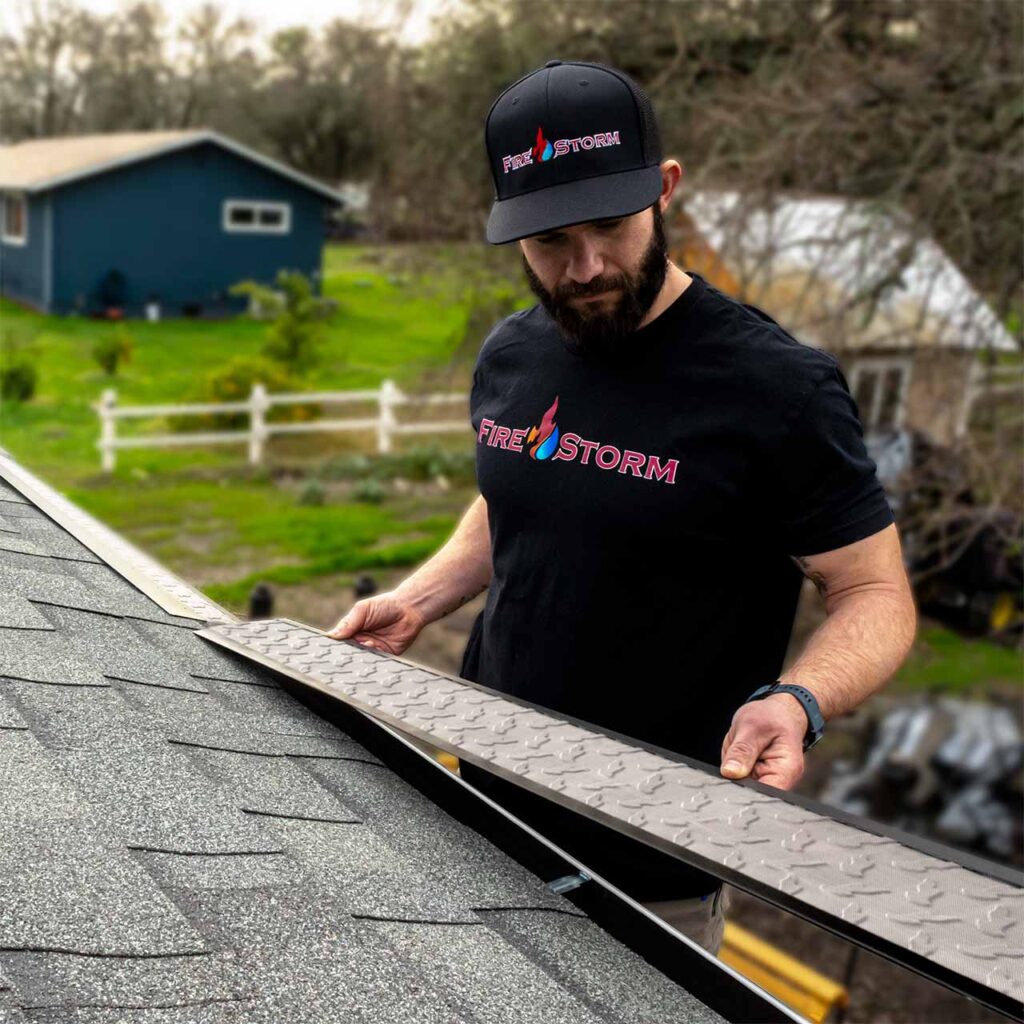
FireStorm® Gutter Guards are professional-grade and engineered with simplicity in mind. Our clean design ensures quick and easy installation that fits most 5” to 7” gutter profiles.
Step-by-Step Instructions for Installing FireStorm Gutter Guards
1. Prepare the Gutters
Begin by removing all existing debris from your gutters. Inspect the gutters for any damage and make any necessary repairs to ensure a secure and effective installation.
2. Position the Gutter Guard
Slide the back rail of the gutter guard underneath the roofing material, ensuring it is positioned far enough for the notched front rail to sit squarely against the front edge of the gutter.
3. Secure the Gutter Guard
Using the included self-drilling Daggerz® fasteners and magnetic hex-driver, secure each gutter guard with three evenly spaced fasteners along the front edge of the gutter, ensuring that they are evenly spaced along the length.
4. Ensure Overlap
To maintain full coverage, ensure the mesh tabs at the ends of each guard overlap with the adjacent guard, preventing any gaps in protection.

Frequently Asked Questions About Gutter Guards
Why are gutters considered a major wildfire ignition risk?
Gutters sit directly along the roofline, where wind-driven embers often land and collect. When gutters fill with dry leaves, pine needles, and other debris, they become a concentrated fuel source. During an ember storm, ignition in a gutter can spread quickly to roof edges, fascia, or nearby vent openings. This is why gutter guards are frequently included in wildfire gutter protection strategies and home hardening guidance.
How do Gutter Guards by FireStorm® help prevent ember-related ignition?
Gutter Guards by FireStorm® are designed to reduce ignition risk by limiting the buildup of combustible debris while creating a noncombustible surface at the gutter line. By keeping leaves and needles out, they reduce the available fuel that embers rely on to ignite. This ember guard approach supports roofline protection during wildfire events, when embers repeatedly land, and debris accumulation becomes a critical vulnerability.
Are fire-rated gutter guards required in WUI or wildfire-prone areas?
Requirements vary by jurisdiction. Many WUI and Chapter 7A-style codes focus on reducing combustible materials at the roofline rather than mandating a specific product. Fire-rated gutter guards can help demonstrate compliance intent, but acceptance depends on local AHJs and inspection practices. Builders and homeowners should always confirm requirements with local officials, as codes may specify noncombustible materials without explicitly naming gutter guards.
What’s the difference between fire-rated gutter guards and standard leaf guards?
Standard leaf guards are often made from plastic or composite materials and are designed primarily for debris control. In wildfire conditions, these materials can deform, melt, or contribute fuel. Fire-rated gutter guards are typically metal gutter guards engineered to remain stable under heat and ember exposure. This difference matters when wildfire gutter protection is the goal, not just seasonal maintenance.
Do gutter guards affect water flow or drainage performance?
Gutter Guards are designed to balance drainage performance with ember protection. Their mesh and profile allow water to enter gutters during normal and heavy rainfall while shedding debris from the surface. As with any gutter system, proper installation and sizing are important to maintain effective water flow without compromising wildfire performance.
Can Gutter Guards be installed on existing homes?
Yes. Gutter Guards are commonly used in retrofit applications and can be installed on most standard residential gutter systems. They are suitable for both new construction and existing homes as part of a broader wildfire gutter protection or home hardening effort. Compatibility depends on the condition of the gutters and the roof configuration, but a full replacement is not typically required.
Do fire-rated gutter guards eliminate the need for gutter maintenance?
Gutter guards significantly reduce debris accumulation, but they do not eliminate maintenance entirely. Periodic inspection is still recommended, especially after storms or high-wind events. Over time, fine debris can collect along roof edges or guard surfaces. Fire-rated gutter guards reduce maintenance frequency while supporting long-term ember guard performance.
Are gutter guards enough on their own for wildfire protection?
Gutters are only one potential ignition pathway. Effective wildfire defense requires a system-based approach that includes ember-resistant vents, ember mesh where appropriate, defensible space, and routine maintenance. Gutter Guards by FireStorm® support wildfire gutter protection goals, but they work best when integrated with other WUI-compliant measures to reduce overall ignition risk.
Let’s Build a Safer Future!
Give us a call or submit your information via the form and a team member will get back to you.


