

Wildfires don’t just threaten individual homes — they threaten entire neighborhoods. In many wildfire events, homes ignite not because flames reach them, but because embers move from structure to structure, turning one ignition into many. That’s why wildfire preparedness is increasingly a community effort, not just a personal one. Firewise Communities® offers a proven, neighbor-driven approach that helps entire neighborhoods reduce wildfire risk together and encourages residents to participate actively.
What Are Firewise Communities?
Firewise Communities® is a national wildfire risk reduction program created by the National Fire Protection Association (NFPA). The program focuses on education, preparedness, and practical mitigation steps that help residents understand how wildfires spread and what they can do to reduce ignition risk around their homes.
Rather than relying on emergency response, Firewise emphasizes proactive prevention. Neighborhoods that participate learn how to assess shared risks, create action plans, and make manageable improvements over time. The program is voluntary and flexible, which means it can work for rural areas, suburban developments, mountain communities, and everything in between.
At its core, Firewise is about helping people protect their homes and fostering a sense of shared responsibility among neighbors, building community pride and confidence in wildfire resilience.
Why Wildfires Spread Faster in Neighborhoods
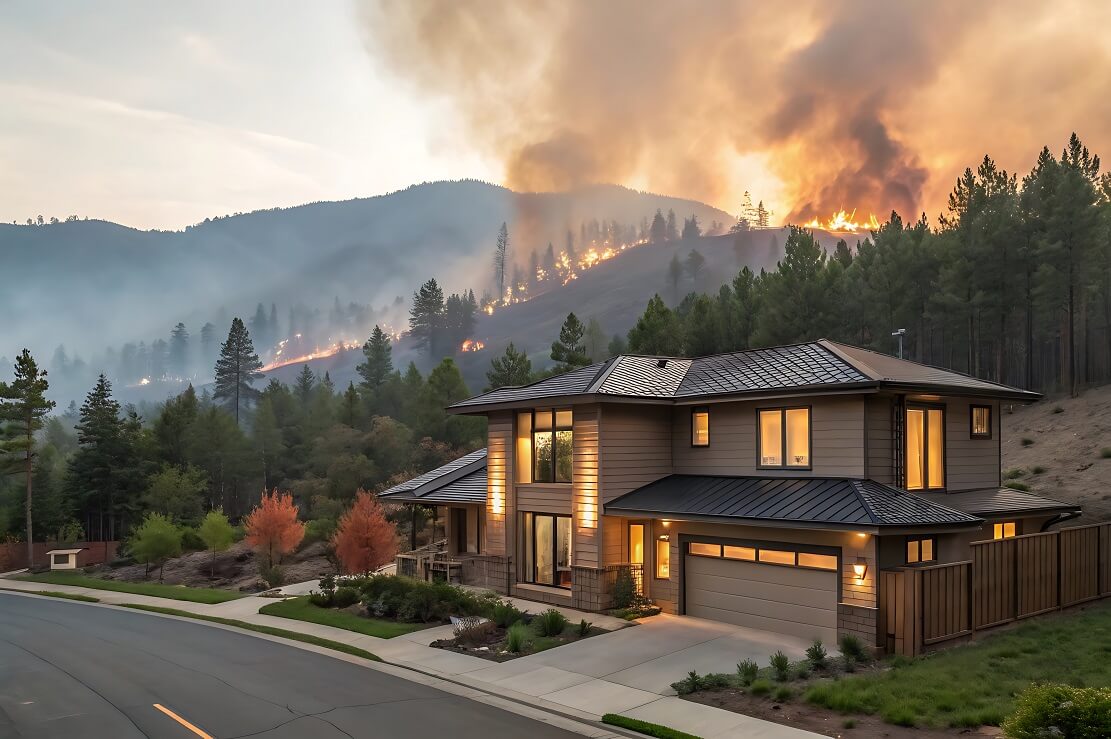
When wildfires approach developed areas, embers are often the primary driver of destruction. Wind can carry burning debris far ahead of the main fire front, depositing embers on rooftops, inside vents, and beneath decks. Once one home ignites, radiant heat and additional embers increase the chance that nearby structures will ignite as well.
Closely spaced homes, shared fences, continuous rooflines, and similar building materials can create chain reactions of ignition. Even if one home has taken steps to reduce risk, nearby vulnerabilities can still threaten the entire block. This is why wildfire mitigation is far more effective when neighbors work together to reduce shared exposure.
How Firewise Communities Reduce Wildfire Risk
Firewise Communities reduce wildfire risk by focusing on collective action and shared responsibility. Instead of treating each property as an isolated project, neighbors work together to identify common hazards and improve them over time.
This coordinated approach helps reduce weak points across the neighborhood, such as unprotected vents, combustible landscaping, or debris-prone rooflines. When multiple homes are hardened, fire spread slows, firefighters have safer working conditions, and suppression efforts become more effective.
Simply put, when fewer homes ignite, fewer homes are lost.
Common Misconceptions About Firewise Programs
One common misconception about Firewise is that it requires costly renovations or large projects. In reality, Firewise promotes simple, affordable improvements homeowners can do over time, focusing on practical steps that make a difference quickly.
Many effective wildfire risk reduction steps are low-cost and DIY-friendly, helping homeowners feel capable and motivated to take manageable actions first.
Firewise isn’t about perfection—it’s about progressive protection.
The Role of Home Hardening in Firewise Communities
Home hardening refers to strengthening a structure so it is less likely to ignite when exposed to embers or radiant heat. Because embers are the primary ignition source in many wildfire events, Firewise Communities place strong emphasis on reducing ember entry points around homes.
When homes resist ignition, the entire neighborhood benefits. Fewer ignitions mean less structure-to-structure fire spread and greater overall resilience. Home hardening doesn’t replace vegetation management or defensible space; it works alongside those efforts to create layered protection.
In Firewise Communities, home hardening is one of the most impactful ways residents can directly reduce wildfire risk.
The Most Common Ember Entry Points in Homes
Embers tend to enter homes through predictable locations where airflow and small openings exist. Firewise guidance prioritizes protecting these areas because they are responsible for a large share of structure ignitions.
Attic and Crawlspace Vents
During wind-driven wildfire events, pressure changes can draw embers into vents. Once inside attics or crawlspaces, embers can ignite insulation, framing, or stored materials, often without visible exterior flames.
Eaves, Soffits, and Gaps
Open eaves, vented soffits, and small construction gaps allow embers to lodge in protected spaces near roof assemblies and walls. These hidden areas can smolder and ignite structural components before anyone realizes there is a problem.
Decks and Under-Deck Areas
Embers frequently collect beneath decks, especially where leaves and debris accumulate. Once ignition starts below the deck, fire can spread upward into exterior walls and floor systems.
Gutters and Rooflines
Gutters often trap dry leaves and pine needles, creating ideal fuel beds. When embers land along roof edges, ignition can begin at the roofline and spread into attic spaces.
Affordable Ember Protection Supports Firewise Goals
Firewise Communities emphasize solutions that are accessible, practical, and scalable — and ember-focused upgrades align perfectly with that philosophy.
Affordable improvements such as ember-resistant vents, ember-blocking mesh, and fire-rated gutter guards directly address the most common ignition pathways. These upgrades can often be installed without specialized equipment, making them well-suited for homeowners who want to take action quickly and affordably.
Firestorm Building Products designs ember protection solutions that support these goals by focusing on:
- Blocking ember intrusion at critical openings
- Maintaining proper ventilation and drainage
- Meeting WUI building standards
- Supporting DIY or contractor installation
These types of improvements help homeowners contribute to Firewise objectives while staying within realistic budgets.

Why Firewise Works Best When Neighbors Act Together
Wildfire risk doesn’t stop at property lines. When neighbors agree on shared standards — such as keeping gutters clear, reducing debris, and upgrading vulnerable building features — risk decreases for everyone.
For HOAs and neighborhood associations, Firewise provides a structure for organizing education, maintenance efforts, and improvement projects. When many homes reduce ignition potential, communities become more defensible, and recovery after fire events becomes more manageable.
Collective preparation turns individual efforts into a shared sense of empowerment and lasting neighborhood resilience, encouraging community pride.
Getting Started With Firewise as a Homeowner or Community
For homeowners, getting involved with Firewise can start with learning how wildfires affect structures and identifying common vulnerabilities around the home. Simple assessments, small upgrades, and regular maintenance all contribute to reduced risk.
For communities, early steps often include organizing informational meetings, reviewing local Firewise guidance, and selecting a few high-impact projects that benefit multiple homes. Many Firewise efforts begin with the same ignition pathways: vents, gutters, decks, and exterior gaps.
Starting small builds momentum, and that momentum strengthens long-term wildfire preparedness.
Wildfire resilience depends on proactive steps, education, and teamwork. Firewise Communities® demonstrate that when neighbors collaborate to reduce ember exposure and strengthen homes, entire neighborhoods become safer. Start your community’s Firewise journey today to build lasting wildfire protection.
By focusing on affordable, practical home hardening strategies and shared responsibility, communities can significantly reduce wildfire risk without relying solely on emergency response. Every vent protected, every gutter cleared, and every opening sealed contributes to a stronger, more resilient neighborhood.
If you’re interested in learning how ember protection and home hardening can support Firewise goals in your area, Firestorm Building Products is here to help.
Contact our team to explore ember protection solutions and community wildfire resources.
Because when neighbors protect their homes together, wildfire resilience grows.

