

Homeowners in wildfire-prone areas are increasingly asking the same question: Should you retrofit ember mesh onto existing vents, or replace them entirely with ember-resistant models?
Both approaches can improve wildfire safety, but they serve different needs depending on your home’s condition, budget, and local code requirements. Understanding how to install fire vents, when to retrofit ember mesh, and what qualifies as WUI-approved vent installation can help you make a confident, informed decision.
We’ll break down both options in clear, practical terms, so you can choose the right upgrade for your home.
Why Vent Protection Matters in Wildfire-Prone Homes
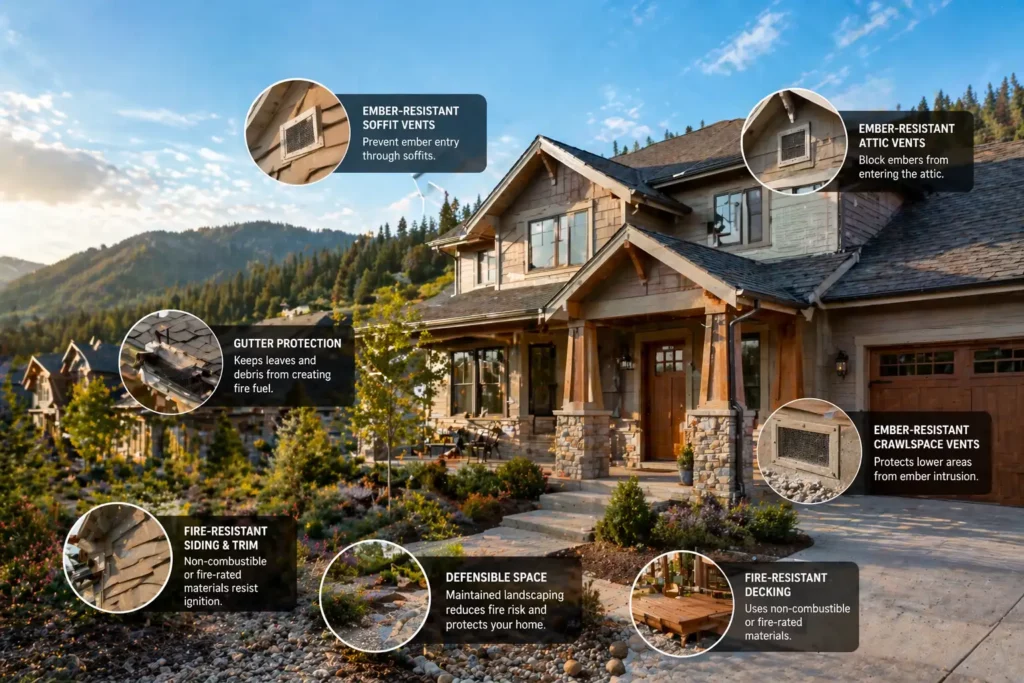
Vents are one of the most common entry points for embers during a wildfire. These openings are essential for airflow, but they also create direct pathways into attics, crawlspaces, and wall cavities.
Wind-driven embers can travel miles ahead of a fire front. Once they enter through vents, they can ignite insulation, framing, or debris inside the structure—often without any direct flame contact on the exterior.
This is why wildfire vent protection plays a critical role in home hardening. For a deeper look at ignition behavior, see how embers ignite homes and how to stop them.
How Embers Enter Through Vent Openings
Embers typically enter through:
- Attic vents located along rooflines or gables
- Soffit vents under eaves
- Crawlspace vents near the foundation
Air pressure changes during a wildfire can pull embers into these openings. Once inside, they settle into enclosed spaces where heat can build and ignition can occur out of sight.
Understanding Ember-Resistant Vents
Ember-resistant vents are specifically designed to reduce the risk of ember intrusion while still allowing necessary airflow. Unlike standard vents, they incorporate protective features that help block or interrupt embers from entering.
These systems play an important role in wildfire mitigation by targeting one of the most common ignition pathways.
Fire-Resistant Vent Materials and Design
Modern fire-resistant vents for homes typically include:
- Corrosion-resistant metal construction
- Fine stainless steel mesh or multi-layer screening
- Baffle systems that disrupt airflow pathways
- Designs tested for ember intrusion resistance
These features help prevent embers from entering while maintaining ventilation performance. Compared to older vent designs, they offer a more consistent level of protection during wildfire conditions.
Retrofit Ember Mesh: Upgrading Existing Vents
Retrofitting is one of the most common ways to improve wildfire vent protection without replacing the entire vent assembly.
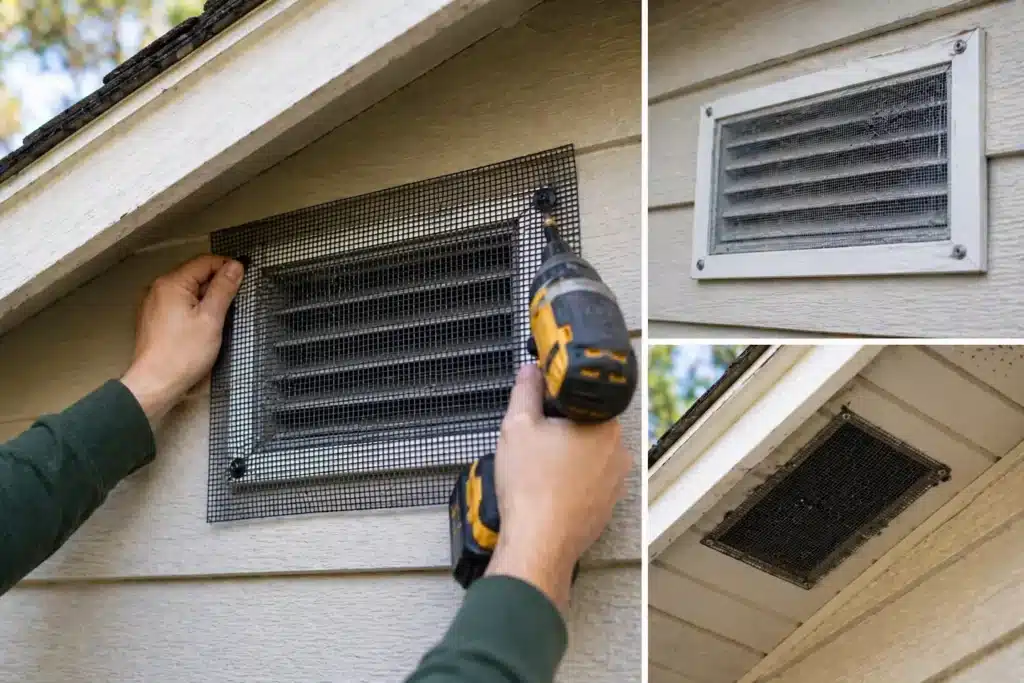
When you retrofit ember mesh, you install a layer of fire-resistant mesh over existing vent openings. This creates a barrier that helps block embers from entering while allowing airflow to continue.
This approach is often used as a wildfire vent retrofit solution because it is:
- Cost-effective
- Faster to install
- Suitable for many existing homes
Learn more about Ember Mesh retrofit options:
When Retrofitting Vents Is the Best Option
Retrofitting works well in situations where:
- The existing vent structure is still in good condition
- Homeowners need a quick upgrade before inspection or insurance review
- The goal is to improve baseline wildfire protection without major construction
For example, homeowners preparing for a defensible space inspection or insurance renewal often choose retrofit solutions as a fast way to address visible vulnerabilities.
However, retrofits are not ideal for every situation. Older vents with damage, corrosion, or irregular shapes may not support the secure installation of mesh. In these cases, gaps or improper fitment can reduce effectiveness.
Installation quality also matters. Poorly secured mesh or improper fastening can create new entry points instead of sealing them.
Explore our blog post about 5 DIY Wildfire Protection Strategies.
Vent Replacement: Installing Fire-Resistant Vents
In some cases, replacing existing vents provides greater protection and improved long-term performance.
Full replacement involves removing older vents and installing ember-resistant systems designed to meet modern wildfire standards. This approach is often used when existing vents are outdated, damaged, or not aligned with current building codes.
Replacement is also common in remodels, new construction, or when aiming to exceed minimum wildfire protection standards.
How to Install Fire Vents Safely
Understanding how to install fire vents helps homeowners and contractors approach replacement projects with confidence.
While installation methods vary, the general process includes:
- Removing the existing vent
- Inspecting the opening for damage or debris
- Fitting the new ember-resistant vent
- Securing and sealing the unit to prevent gaps
Proper installation is essential.While the process may appear straightforward, there are common mistakes to avoid:
- Incomplete sealing that leaves small ember entry points
- Choosing incorrect vent sizes that affect airflow
- Blocking ventilation unintentionally, which can lead to moisture issues
For homeowners comfortable with basic tools, some installations can be handled as DIY projects. However, complex siding types or code-driven installations may benefit from professional support.
WUI Approved Vent Installation Requirements
Wildfire building codes in many regions, particularly in the Wildland–Urban Interface (WUI), include specific requirements for vent protection.
WUI-approved vent installation typically focuses on:
- Limiting ember intrusion through small openings
- Using noncombustible materials
- Meeting testing standards such as Chapter 7A or similar guidelines
- Ensuring consistent performance under wildfire conditions
Code requirements vary by region. California, Colorado, and local jurisdictions may interpret or enforce standards differently through local AHJs. Some jurisdictions require vents to meet specific testing standards, while others allow prescriptive solutions such as mesh coverings.
It is also important to recognize that meeting minimum code does not always provide maximum protection. Many homeowners choose to exceed baseline requirements to improve long-term wildfire resistance.
To understand how requirements vary, review wildfire vent requirements. You can also explore broader wildfire home hardening laws.
Retrofit vs Replacement: Comparing Vent Upgrade Options
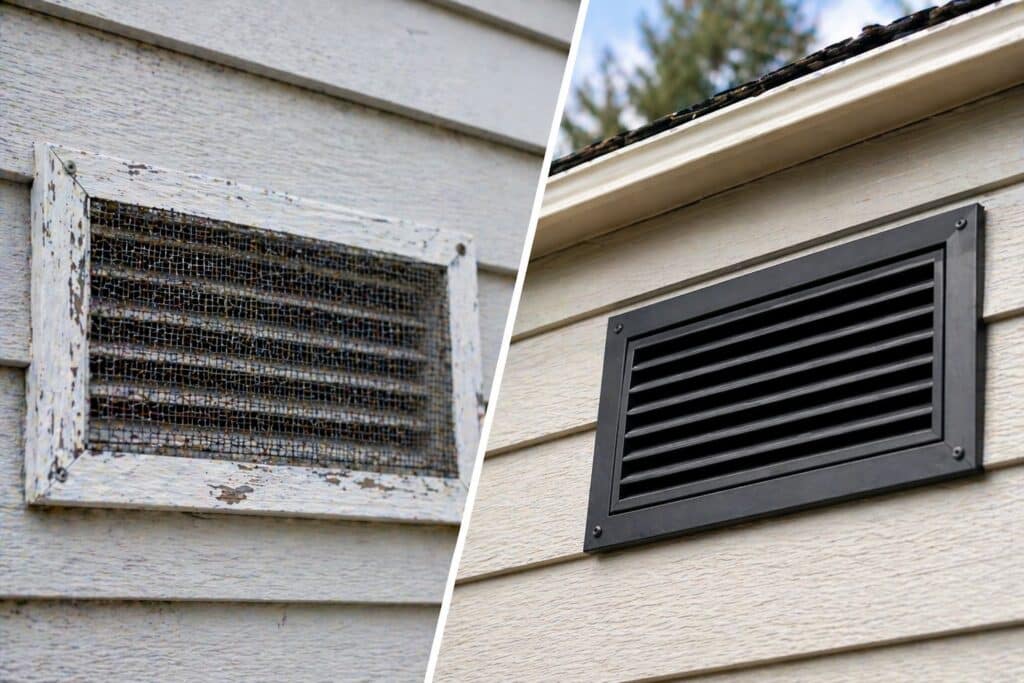
Choosing between retrofit and replacement depends on your goals, budget, and local requirements. Each approach offers advantages.
Here’s a side-by-side comparison:
| Factor | Retrofit Ember Mesh | Vent Replacement |
| Cost | Lower upfront cost | Higher initial investment |
| Installation Time | Quick, often same-day | Longer, may require more labor |
| Structural Changes | Minimal | Moderate |
| Protection Level | Improves ember blocking | Typically higher, system-based protection |
| Code Compliance | May meet minimum requirements | More likely to meet stricter standards |
| Long-Term Durability | Depends on mesh quality | Designed for long-term performance |
In practical terms:
- Choose retrofit solutions when you need a fast, cost-effective upgrade for an existing home in a moderate-risk area
- Choose replacement when long-term performance, higher wildfire exposure, or stricter compliance requirements are priorities
Cost vs. Long-Term Value Considerations
While retrofit solutions often have a lower upfront cost, it is important to consider long-term performance and maintenance.
Retrofit mesh may require periodic inspection and cleaning, especially in areas where debris or corrosion can affect airflow and durability. Over time, these factors can reduce effectiveness if not maintained.
Full vent replacement, while more expensive initially, typically provides more consistent performance under wildfire conditions. Engineered vent systems are designed to maintain airflow while resisting ember intrusion over time, potentially reducing the need for ongoing adjustments.
For homeowners in higher-risk areas or planning to stay long-term, replacement often represents a more durable investment. In lower-risk scenarios or short timelines, retrofit solutions can still provide meaningful improvement.
Vent Protection as Part of a Complete Wildfire Defense Strategy
Vents remain one of the most common pathways for ember intrusion during wildfires. Addressing them is a critical step in improving home resilience.
Homeowners have two primary upgrade paths:
- Retrofitting Ember Mesh onto existing vents
- Replacing vents with ember-resistant systems
Both options can improve wildfire protection, but they differ in cost, performance, and long-term reliability. WUI-approved vent installation ensures compliance, while higher-performing systems can further reduce risk.
Taking action before wildfire season—whether through retrofit or replacement—can help reduce vulnerabilities and strengthen overall protection.
Use our wildfire home hardening checklist to evaluate your property or learn more about roofline risks.
Conclusion
Vent openings are one of the most common entry points for embers during a wildfire, making them a critical focus for home protection.
Homeowners have two primary upgrade paths: retrofit ember mesh onto existing vents or replace them with ember-resistant vent systems. Both options can improve safety, but they offer different levels of protection, cost, and long-term performance.
Retrofitting provides a fast, cost-effective way to reduce risk, while replacement offers a more comprehensive solution aligned with modern wildfire building standards.
By understanding how to install fire vents, when to retrofit ember mesh, and what qualifies as WUI-approved vent installation, homeowners can take meaningful steps toward safer, more resilient homes.
To explore vent protection solutions or get guidance on your next steps, contact our team today!

