

Selling a home in California has always involved paperwork, inspections, and tight timelines. But for properties located in wildfire-prone areas, another factor is now influencing how smoothly transactions move through escrow: wildfire compliance inspections under the AB 38 disclosure law.
As enforcement tightens in 2026, more buyers, agents, and escrow officers are requiring verification that homes meet basic wildfire safety standards before closing. These inspections often focus on common vulnerabilities like vents, rooflines, gutters, and vegetation close to the structure.
For sellers under contract deadlines, failing an inspection can create last-minute repair demands, escrow delays, or renegotiation requests.
Thankfully, most inspection issues are predictable and fixable. Understanding what inspectors look for and how to prepare before listing can help you move through escrow with fewer surprises, giving homeowners and professionals confidence in a smoother process.
Our guide explains how the AB 38 disclosure law affects home sales and how sellers can prepare their property to pass wildfire inspections without derailing the transaction, turning compliance into a potential selling advantage.
What Is AB 38 and How Does It Affect Your Home Sale?
California’s AB 38 disclosure law requires sellers of homes located in high or very high fire hazard severity zones to provide buyers with documentation related to wildfire safety inspections and defensible space compliance.
The law was created in response to catastrophic wildfire losses across the state. Investigations repeatedly showed that many homes ignited due to predictable vulnerabilities, including unprotected vents, combustible debris near structures, and vegetation close to exterior walls.
Under AB 38, sellers may now be required to disclose whether the property has passed a wildfire safety inspection or provide documentation if mitigation work is required.
These inspections typically focus on two areas:
- Defensible space compliance
- Home hardening features that reduce ember intrusion
Depending on the jurisdiction, sellers may need to complete certain improvements before the sale can close. In many transactions, buyers and lenders are increasingly requesting confirmation that the property meets basic wildfire safety standards.
For homes located in designated fire hazard zones, wildfire compliance is becoming a routine part of the closing process rather than an optional step.
For official program guidance, sellers can review the California Board of Forestry’s AB 38 resources.
What Inspectors Look for During a California Home Sale Fire Inspection
During a California home sale fire inspection, officials typically evaluate the property for conditions that increase the likelihood of ember-driven ignition. Although inspection checklists vary by jurisdiction, most focus on several common areas of vulnerability.
Vent Openings
Attic, soffit, and crawlspace vents are one of the most common pathways for embers to enter a structure. Inspectors often look for vents that lack ember-resistant protection or use larger mesh that allows embers to pass through.
Defensible Space Around the Home
Vegetation, mulch, and combustible materials within the immediate perimeter of the structure are evaluated carefully. Inspectors look for proper clearance between plants and buildings and may require the removal of dry vegetation.
Roof and Gutter Condition
Roofs and gutters are inspected for debris, such as leaves, pine needles, and other combustible materials. These areas can ignite easily during ember storms.
Combustible Materials Within the First Five Feet
The area immediately surrounding the home, often referred to as Zone 0, is examined for wood mulch, stored firewood, or other flammable materials.
Eaves and Under-Roof Areas
Open gaps beneath eaves or exposed structural elements may allow embers to accumulate or enter concealed spaces.
Most inspection failures occur when several of these small issues combine to create ignition risk.
The Most Common Reasons Homes Fail AB 38 Wildfire Inspections
Wildfire inspectors frequently identify the same vulnerabilities when properties fail AB 38 compliance checks. These failures are rarely structural problems. Instead, they are typically maintenance or retrofit issues that can be addressed relatively quickly.
Some of the most common inspection failures include:
Standard Vents Without Ember Protection
Older vent designs often use large openings that allow wind-driven embers to pass through.
Open Eave Gaps
Small openings under rooflines can trap embers and allow fire to spread into attic spaces.
Leaf-Filled Gutters
Debris accumulation in gutters creates fuel beds that can ignite when embers land on the roofline.
Wood Mulch Near Foundations
Combustible landscaping materials close to the home can ignite and spread flames to the siding.
Deck-to-Home Transitions
Wooden decks connected directly to exterior walls can allow fire to travel from surface ignition points into the structure.
Most of these vulnerabilities fall into what wildfire investigators describe as predictable failures—conditions that consistently appear in homes that ignite during wildfire events.
Fast-Track Wildfire Retrofits for Escrow
When wildfire inspection issues appear during a home sale, sellers often assume expensive renovations are required. The reality, however, is that most fixes are relatively straightforward—news that can empower homeowners to act confidently and proactively.
For many properties, wildfire retrofit for escrow involves targeted upgrades that can be completed in a short timeframe.
Common improvements include:
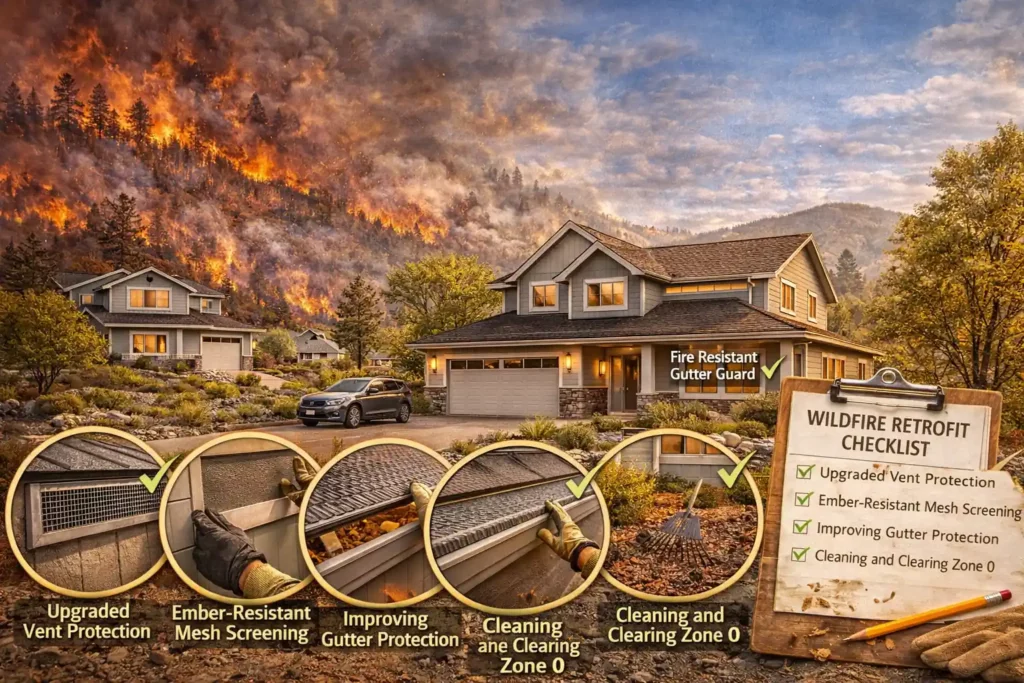
Upgrading Vent Protection
Installing ember-resistant vents or protective mesh helps prevent burning debris from entering attic or crawlspace areas.
Adding Ember-Resistant Mesh Screening
Fine metal mesh can be used to retrofit vulnerable openings while maintaining airflow.
Improving Gutter Protection
Cleaning gutters and installing debris-resistant gutter protection systems helps prevent combustible buildup.
Cleaning and clearing Zone 0
Removing mulch, leaves, and stored materials within the first five feet of the home significantly reduces ignition risk.
Many of these improvements can be completed within one or two weekends, particularly when homeowners address them before listing.
For sellers looking for retrofit solutions, resources such as ember-resistant vent systems, ember mesh protection, and fire-rated gutter guard solutions can help address common inspection concerns quickly.
Preparing these upgrades early can reduce the likelihood of repair negotiations during escrow.
Who Pays for AB 38 Retrofits, Buyer or Seller?
Responsibility for wildfire retrofits during a transaction is not defined by AB 38 itself. Instead, it becomes a point of negotiation between buyers and sellers, influencing strategy during sale preparations.
In competitive markets, sellers often choose to complete improvements before listing to present a compliant property. This approach can help reduce transaction friction and avoid delays.
In other situations, buyers may request:
- repair credits
- price adjustments
- escrow holdbacks
Market conditions often determine how these negotiations play out. Properties that demonstrate wildfire compliance upfront may have an advantage when buyers compare listings.
Because every transaction is unique, sellers should consult with their real estate professional to determine the best strategy.
How to Prepare Before You List
Preparing for wildfire compliance before listing a property can reduce surprises during escrow.
A simple pre-listing checklist may include:
- Confirm whether the property is located in a high fire hazard severity zone by reviewing local maps or consulting your county’s fire department resources, ensuring you understand your specific compliance requirements.
- Schedule a voluntary defensible-space inspection, if available.
- Upgrade vulnerable vents with ember-resistant protection.
- Clear vegetation and combustible materials near the structure.
- Remove debris from roofs and gutters.
- Document improvements with photos and receipts.
Completing these steps before listing gives sellers more control over timing and budget while reducing the risk of inspection delays later.
The Financial Risk of Waiting Until Escrow
Waiting until escrow to address wildfire inspection issues can create unnecessary risk for sellers. If problems are identified late in the transaction, several outcomes are possible:
- Escrow timelines may be extended
- Buyers may request price reductions
- Lenders or insurers may require additional documentation
- Buyers may walk away from the deal
In competitive markets, buyers often compare multiple properties at once. Homes that already demonstrate wildfire preparedness may appear more attractive than properties requiring additional work. Addressing wildfire compliance before listing can prevent these last-minute complications.
Turning Compliance Into a Selling Advantage
Wildfire preparedness is becoming an increasingly important consideration for homebuyers, particularly in California’s fire-prone regions. Homes that demonstrate wildfire mitigation measures often provide buyers with greater confidence in the property’s long-term resilience.
Features such as:
- Ember resistant vents,
- debris-resistant gutter systems,
- defensible space landscaping,
- and documented home hardening improvements
can help reassure buyers that the property has been maintained with wildfire risk in mind. For sellers, this preparation can turn regulatory compliance into a marketing advantage.
Close With Confidence in 2026
The AB 38 disclosure law is now a permanent part of the California real estate landscape. As enforcement continues to evolve, wildfire inspections will increasingly influence how smoothly properties move through escrow.
Fortunately, most compliance issues involve predictable vulnerabilities that can be addressed with relatively simple improvements. By preparing early, sellers can reduce inspection surprises, maintain negotiating leverage, and keep transactions on schedule.
Wildfire compliance is ultimately about preparation. When homes are maintained with ember protection and defensible space in mind, passing inspections becomes far more manageable.
To learn more about practical home hardening solutions and ember protection strategies, explore Firestorm®’s wildfire preparedness resources or contact our team for guidance.

