

Wildfire insurance in California has entered a new reality. For many homeowners, especially those in high-risk areas, traditional coverage options have increasingly narrowed, leaving the California FAIR Plan as the only viable path forward. At the same time, premiums continue to rise as wildfire risk increases across the state.
This has led many homeowners to ask the same question: Is there anything you can do to lower your insurance costs?
The answer lies in reducing risk at the property level. Home-hardening and wildfire-mitigation improvements are becoming key factors in how insurers evaluate exposure. By aligning upgrades with IBHS Wildfire-Prepared Home standards, homeowners can improve resilience and potentially support a reduction in fire insurance premiums over time.
Our guide explains how wildfire risk affects California FAIR Plan insurance, which improvements matter most, and how a system-based approach to home hardening can strengthen both protection and insurability.
Why California FAIR Plan Premiums Are Rising
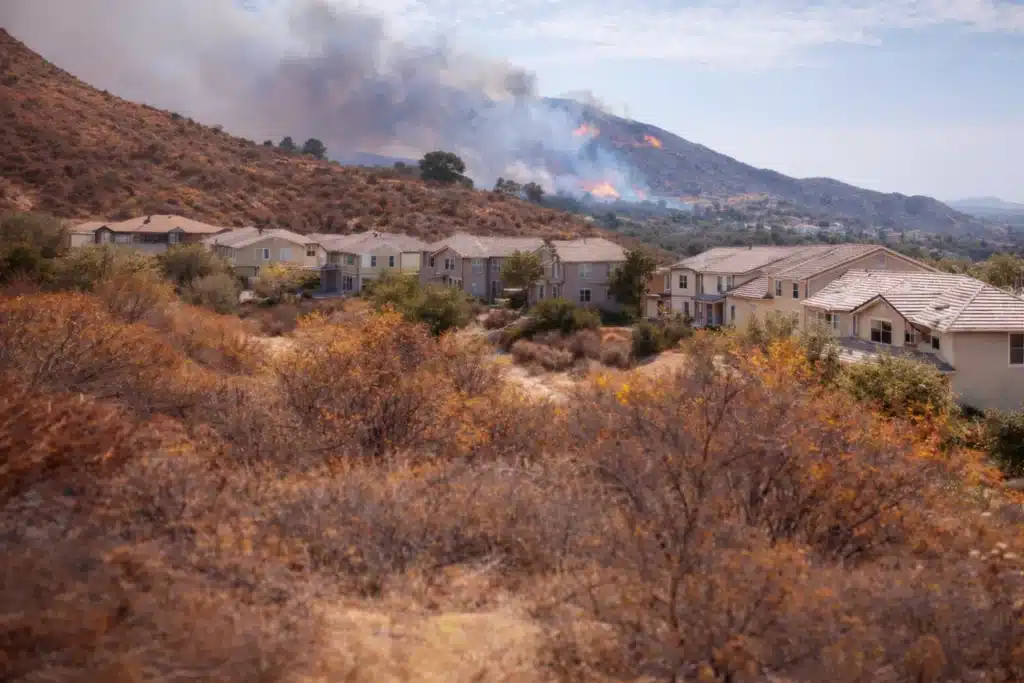
Insurance premiums in wildfire-prone areas are increasing due to a combination of environmental risk and market shifts. Larger, more frequent wildfires have changed how insurers evaluate exposure, especially in Wildland–Urban Interface (WUI) zones where homes and vegetation meet.
As private insurers reduce coverage in high-risk regions, more homeowners are turning to the FAIR Plan. This increased reliance places pressure on the system, which is designed as a last-resort option rather than a comprehensive policy.
At the same time, insurers are placing greater emphasis on property-level risk. Homes that show signs of vulnerability—such as unprotected vents, combustible materials near the structure, or debris accumulation—are more likely to carry higher premiums.
This is where California FAIR Plan discounts enter the conversation. While not always guaranteed, risk reduction efforts can influence how a property is evaluated, particularly as mitigation-based underwriting becomes more common.
For a deeper look at proactive strategies, explore wildfire defense for homes.
What the California FAIR Plan Covers
The California FAIR Plan provides basic fire insurance coverage, including protection against fire, smoke, and internal explosion. However, it differs from standard homeowners’ insurance in several ways.
It typically does not include liability coverage or protection for theft, water damage, or other common risks. Because of these limitations, many homeowners pair it with a supplemental “wrap-around” policy.
Due to its narrower scope and increasing costs, homeowners often look for ways to reduce premiums or improve eligibility for more comprehensive coverage options, which is where wildfire mitigation plays an increasingly important role.
How Wildfire Risk Influences Insurance Premiums
Insurance providers evaluate wildfire risk using a combination of environmental data and property-specific conditions. While location plays a major role, structural vulnerabilities often determine how a home performs under real-world wildfire exposure.
Common risk factors include:
- Proximity to dense vegetation
- Slope and wind exposure
- Roofing materials and roof condition
- Ventilation openings and ember entry points
- Accumulated debris in gutters or along rooflines
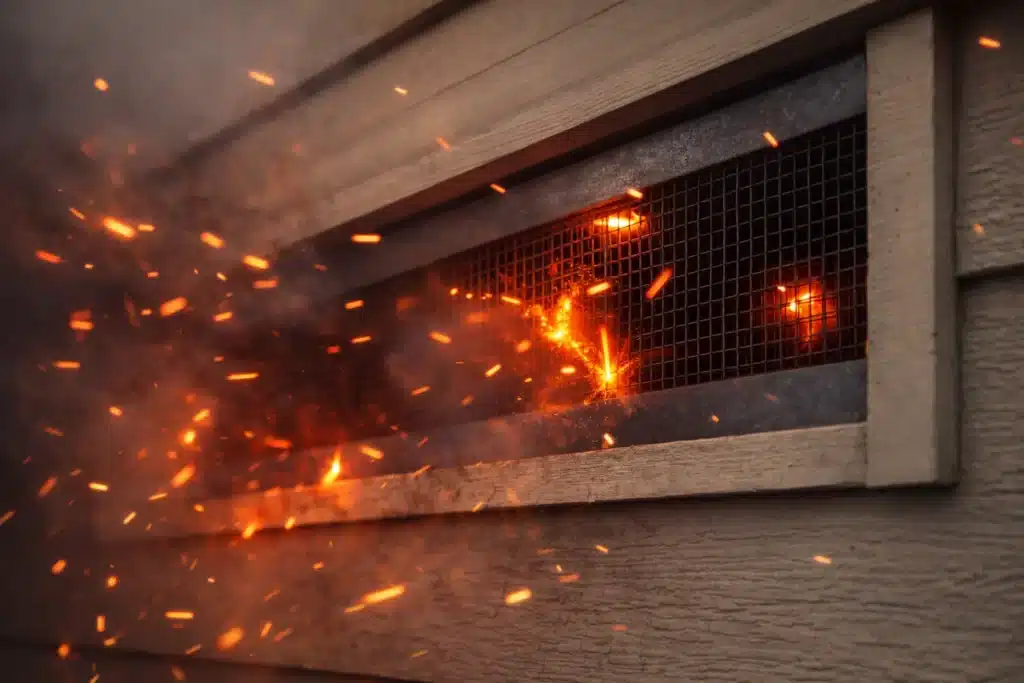
Among these, ember exposure has become one of the most critical considerations. Wind-driven embers can travel long distances and ignite homes without direct flame contact.
Understanding how embers ignite homes is key. Reducing these vulnerabilities through targeted improvements can directly support fire insurance premium reduction by lowering the overall risk profile of the home.
Why Structural Vulnerabilities Increase Wildfire Risk
Many homes are not lost to large flames, but to small ignition points. Embers enter through vents, ignite debris in gutters, or accumulate near the foundation. These “predictable failures” are often preventable with proper design and maintenance.
Common ignition points include:
- Attic and crawlspace vents
- Roof edges and gutters
- Under-eave gaps
- Combustible materials within five feet of the home
Addressing these areas is a foundational step in wildfire home hardening.
Understanding IBHS Wildfire Prepared Home Standards
The IBHS Wildfire Prepared Home™ program provides a research-backed framework for reducing wildfire risk at the property level. It focuses on how homes perform during ember storms, radiant-heat exposure, and direct-flame contact.
Rather than relying on a single upgrade, the program emphasizes a system-based approach. This includes strengthening vulnerable areas across the entire structure, from the roofline to the ground.
IBHS Wildfire Prepared Home standards are increasingly referenced in wildfire mitigation discussions and may influence how insurers assess property resilience.
Key Home Hardening Improvements Recommended by IBHS
Common upgrades aligned with IBHS guidance include:
- Installing ember-resistant vents
- Protecting roof edges and gutters
- Managing debris accumulation
- Maintaining defensible space around the structure
Each of these improvements targets a specific ignition pathway, reducing the likelihood that embers can start a fire.
Vent Protection and Ember Intrusion Prevention
Vents are one of the most common entry points for embers. Once inside, embers can ignite insulation or framing materials, allowing fire to spread internally.
Upgrading to ember-resistant systems helps block these entry points while maintaining airflow.
Home Hardening Upgrades That Can Improve Insurability
Home-hardening upgrades focus on reducing the likelihood of ignition during a wildfire. These improvements are often practical, cost-effective, and achievable without major construction.
Common upgrades include:
- Vent retrofits or replacements
- Ember mesh installation
- Roofline and gutter protection
- Vegetation and defensible space management
These wildfire mitigation improvements can strengthen a home’s risk profile and enhance long-term insurability.
Roofline and Gutter Protection
Gutters often collect leaves, pine needles, and debris, which can ignite when embers land on them. Once ignited, flames can spread to the roof edge or attic.
Installing wildfire gutter protection systems helps reduce this risk by limiting debris buildup and creating a more fire-resistant barrier.
Defensible Space and Vegetation Management
Maintaining defensible space reduces the intensity of fire exposure near the home. This includes clearing combustible materials, trimming vegetation, and maintaining proper spacing between plants.
Why a System-Based Home Hardening Strategy Matters
Wildfire mitigation works best when multiple components function together. A single upgrade may reduce risk, but gaps in other areas can still leave the home vulnerable.
For example, fire-resistant siding may perform well under radiant heat, but unprotected vents can still allow embers inside. Similarly, clean gutters reduce fuel load, but nearby vegetation can still pose a threat.
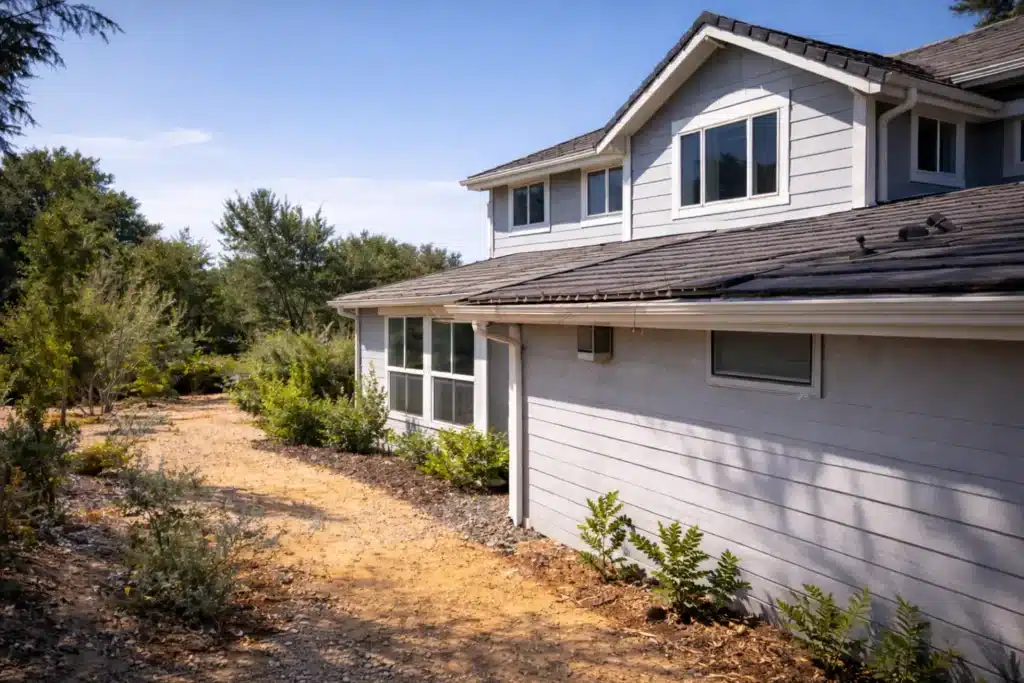
Wildfire home hardening focuses on eliminating weak points across the entire structure.
Using a Home Hardening Checklist
A structured checklist helps homeowners identify vulnerabilities and prioritize upgrades based on risk level and budget.
Steps Homeowners Can Take to Reduce Wildfire Insurance Risk
Reducing wildfire risk starts with a clear, actionable plan. Homeowners can take the following steps:
- Inspect the home for common ignition vulnerabilities
- Upgrade vents and openings to reduce ember entry
- Remove debris from gutters and rooflines
- Maintain defensible space around the structure
- Plan future upgrades based on the highest-risk areas
These steps support wildfire risk mitigation and contribute to improved insurance positioning.
Documenting Mitigation Improvements for Insurance Providers
Documentation plays an important role when discussing risk with insurers. Homeowners should keep:
- Photos of completed upgrades
- Receipts and product specifications
- Inspection reports or certifications
This information can support conversations around wildfire insurance eligibility improvements and demonstrate proactive risk reduction.
The Long-Term Financial Benefits of Home Hardening
Home hardening provides value beyond immediate wildfire protection. Over time, these improvements can contribute to:
- Improved insurability
- Greater property resilience
- Potential reductions in insurance costs
- Increased buyer confidence during resale
While not all upgrades directly result in immediate savings, they support long-term reductions in fire insurance premiums by addressing the factors insurers use to assess risk.
Final Thoughts
Wildfire insurance costs in California are unlikely to return to previous levels. As risk continues to evolve, homeowners must take a more active role in protecting their properties.
Home hardening offers a practical path forward. By reducing structural vulnerabilities and aligning with IBHS Wildfire-Prepared Home standards, homeowners can strengthen their resilience and improve their standing with insurers.
Rather than relying solely on external protection, a system-based approach to wildfire mitigation puts control back in the hands of the homeowner.
To learn more about wildfire protection strategies or to explore next steps, contact our team today!

