

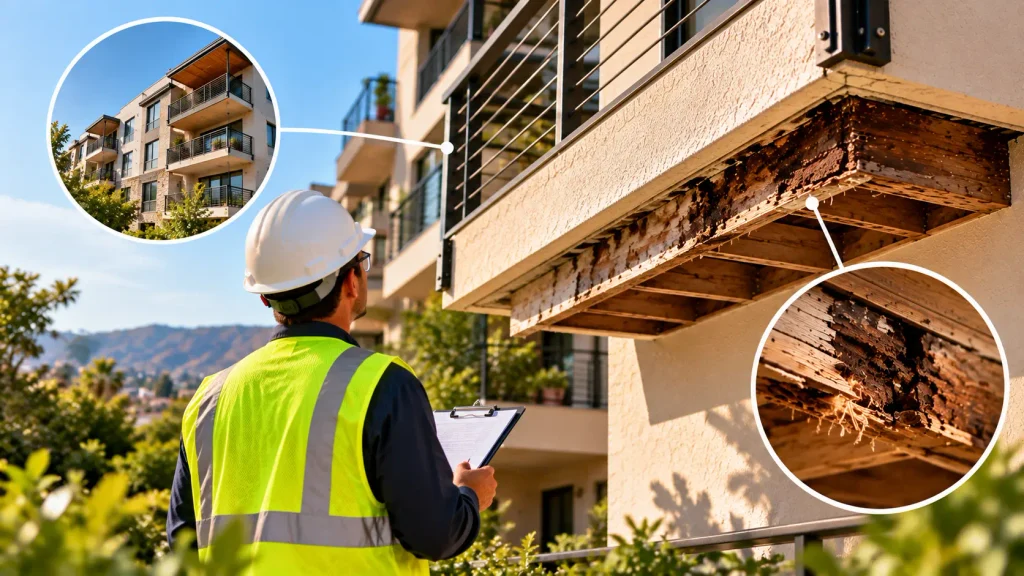
On a summer evening in June 2015, six people died when a fourth-floor balcony gave way at a Berkeley apartment building. The structure hadn’t shown any obvious warning signs. In fact, from the outside, it looked just like any other balcony, but inside the framing, years of water intrusion had silently been rotting the wood until there was nothing left to hold. The collapse took seconds; the legislative response took years, but that tragedy prompted California to act, and Senate Bill 326 is one result.
If you own, manage, or sit on the board of a California condominium association, SB 326 directly affects you. This governance obligation carries real financial and legal consequences if you don’t follow it. Although the initial inspection deadline has passed, this guide explains where things stand in 2026, what the law requires, and what your association needs to know moving forward.
What Is the SB 326 Balcony Inspection Law?
Why California Passed SB 326
Senate Bill 326, signed into law in 2019, requires every California condominium HOA with three or more units to inspect its exterior elevated elements, such as balconies, decks, walkways, and stairways on a recurring cycle. The law was a direct response to documented structural failures in exterior elevated elements (EEEs) caused by water intrusion, wood decay, and deferred maintenance. This type of damage typically develops in concealed structural components where it isn’t visible during routine observation.
For those already doing routine inspections, this may feel like paperwork for its own sake, but the goal is to get qualified eyes on load-bearing structural components to prevent a fall.
What Does SB 326 Require?
SB 326 applies to common interest developments, including apartments and condominium associations, and covers elevated exterior elements (EEEs) located in common areas that are more than six feet above ground level and supported by wood or wood-based products. The law requires inspections by a licensed structural engineer, architect, or, following AB 2114, a licensed civil engineer. General contractors, home inspectors, and property managers do not qualify. The bill requires inspecting a “random and statistically significant sample” of EEEs, according to California’s Legislative Information, with 95% confidence and an error margin of ±5%.
Inspection and repair are separate obligations. An inspection identifies what needs attention. Repairs, where required, are a follow-on maintenance obligation for owners, and not something the inspector handles.
Which Properties Are Subject to SB 326?
Buildings and Balconies Covered by the Law
SB 326 applies to condominium associations and common interest developments (CIDs) governed under the Davis-Stirling Act, specifically those with three or more units containing EEEs supported by wood or wood-based products. Balconies are considered common elements of a multi-family property, and HOAs are responsible for balcony repairs unless CC&Rs clearly state otherwise.
This law does NOT apply to planned developments, only to condominiums as defined under the Davis-Stirling Act. If you’re uncertain whether your property qualifies, confirm with legal counsel before assuming either way.
Who Is Responsible for Compliance?
According to Rimkus.com, HOA boards must review reports at open meetings, provide written summaries to all owners within 15 days, retain reports for two inspection cycles, and make reports available to local jurisdictions. Property managers supporting HOA boards play an important operational role, but the legal obligation sits with the board.
What Does an SB 326 Balcony Inspection Look For?
Most of the damage SB 326 inspections are designed to catch isn’t visible to the naked eye, so the inspection process is designed to look beyond the surface. Here’s what inspectors are looking for when they do:
Structural Deterioration
The inspection focuses on load-bearing components, the parts of an EEE that, if they fail, cause the structure to fail. Inspectors evaluate wood framing for rot, decay, and moisture damage; metal hardware and connectors for corrosion; and the overall structural integrity. Because this damage most often develops in concealed spaces, inspectors use methods that allow evaluation of components not visible from the surface, including borescope inspection, moisture metering, and in some cases, opening sections of the structure.
Waterproofing and Drainage Issues
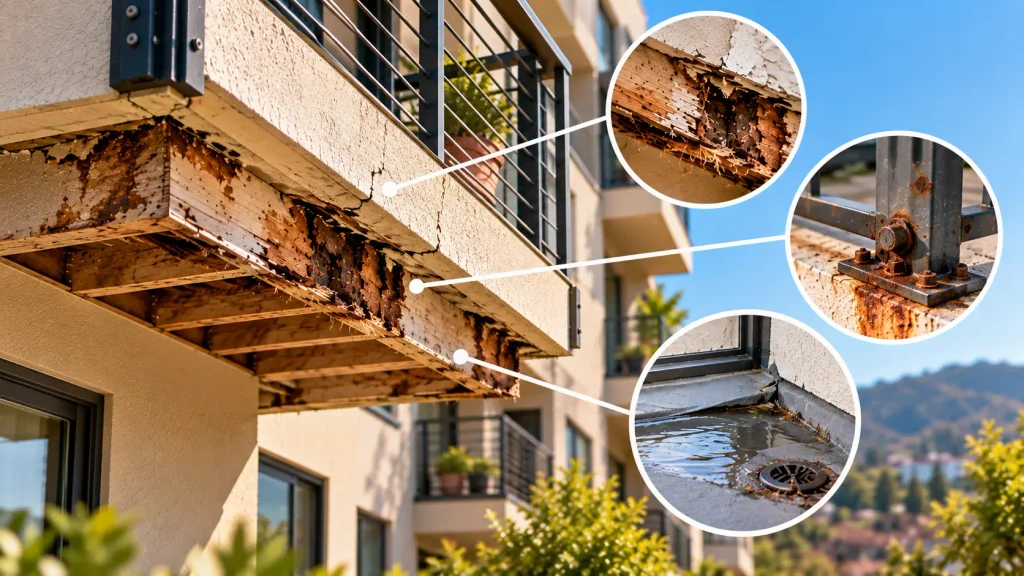
Water intrusion is the most common cause of EEE deterioration. Failed waterproofing membranes, inadequate or blocked drainage, and improper flashing allow moisture to inundate structural components, causing wood decay and corrosion over time. Inspectors look for evidence of past and ongoing water intrusion, such as staining, efflorescence, surface cracking, and drainage that doesn’t move water away from the structure effectively.
Railings, Guardrails, and Connections
Attachment points, such as where railings connect to the deck structure and where the deck connects to the building, are some of the most critical areas to be inspected. Connection hardware is especially vulnerable to corrosion, and loose or deteriorated connections create a domino effect, compromising the stability of otherwise intact components. Trained inspectors can distinguish between cosmetic issues (peeling paint, surface rust, minor surface cracking) and structural safety concerns that require action.
SB 326 Inspection Timeline and 2026 Requirements
Where Things Stand Right Now
This is the point where SB 326 and SB 721 are most commonly confused.
The AB 2579 extension does NOT apply to most HOAs. While apartment owners under SB 721 received a reprieve until January 1, 2026, the deadline for condominium associations under SB 326 officially passed on January 1, 2025, with no extension. Baycitiesconstruction
For existing condominium associations, the first inspection was required to be completed by January 1, 2025. Newer projects with building permit applications submitted on or after January 1, 2020, have six years from the certificate of occupancy to complete their first inspection. After the initial inspection, SB 326 requires follow-up inspections in a 9-year cycle, aligned with the recurring inspection cycle.
If your condominium association has not yet completed its initial inspection, the deadline has passed, and the exposure is real. Properties without completed inspections now face daily penalties of up to $500 and potential findings of negligence per se in future injury litigation. Additionally, in 2026, banks are rejecting mortgages for condo units if the HOA doesn’t have a valid Balcony Safety Certificate on file.
What Happens After an Inspection?
Inspection outcomes fall into a few categories. If no significant issues are found, the report documents that finding and the next inspection is scheduled for nine years out. If inspectors identify deficiencies, any dangerous conditions require immediate repair, while standard deficiencies have no specified timeline. If inspectors identify immediate threats to occupant safety, they must notify the association and local code enforcement within 15 days, and the association must immediately restrict access to affected areas until repairs are completed.
All findings must be documented. Reports must be retained for two inspection cycles and made available to owners and local jurisdictions on request.
Common Balcony Problems Property Owners Should Watch For
Rot, Cracks, and Water Damage
Surface cracking in waterproofing membranes, soft spots in decking, discoloration beneath deck surfaces, and bubbling or peeling finishes are all visible indicators of underlying moisture damage. The consistent pattern in EEE failures is that visible surface symptoms appear well after structural damage has already developed, which is exactly why the inspection requirement exists.
Corrosion and Failed Connections
Exposed metal hardware—joist hangers, bolts, post bases, and railing attachment points—corrodes over time, particularly in coastal environments or anywhere drainage keeps hardware wet for extended periods. Corroded connections are a structural concern that surface observation alone often underestimates; what looks like surface rust can represent significantly reduced load capacity in the underlying fastener.
Poor Drainage and Waterproofing
Standing water on deck surfaces, clogged drains, and waterproofing membranes that have reached the end of their service life are among the most common contributors to accelerated deterioration. Water that can’t drain away from the structure migrates into framing cavities instead.
How to Prepare for an SB 326 Balcony Inspection
Review Existing Records
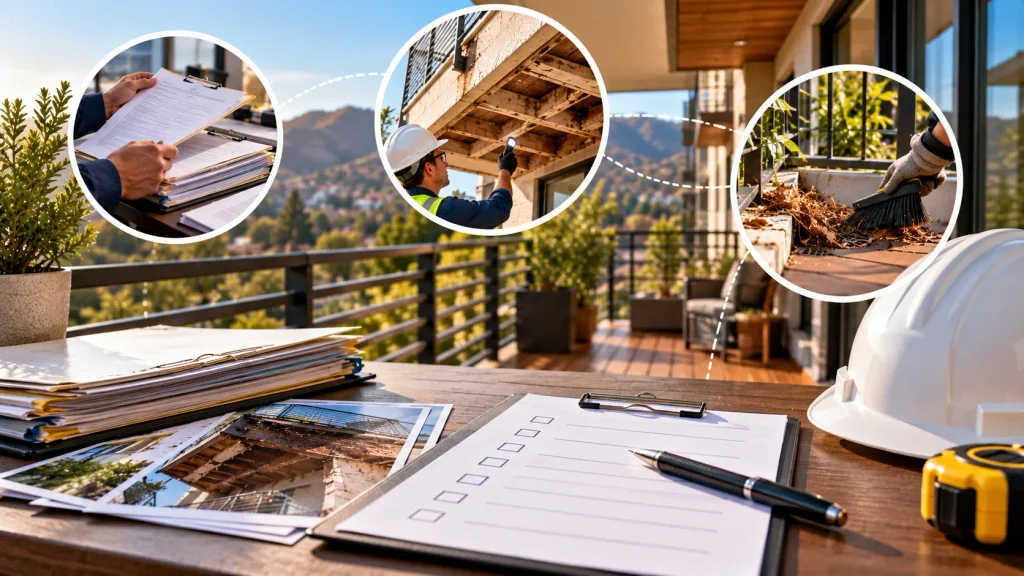
Gather previous inspection reports, repair permits, contractor invoices, and any maintenance records related to EEEs on the property. A clear documented history helps the inspector understand the property’s maintenance context and supports the board’s due diligence record.
Do a Visual Walkthrough First
Before the professional inspection, walk accessible EEE areas and note anything obviously worth flagging: visible cracking, staining, soft decking, loose railings, or drainage issues. This doesn’t substitute for the required inspection, but it helps you come into the process informed and gives you a baseline for evaluating the inspector’s findings.
Address Maintenance and Protection Issues
Debris accumulation on decks and balconies—leaves, organic material, standing water—accelerates surface deterioration and can obstruct drainage. Clearing EEE surfaces before inspection is good practice and gives inspectors cleaner access to evaluate structural conditions.
In wildfire-prone areas, balconies and decks also carry an ember-accumulation risk. EmberMesh™ provides ember-resistant protection for deck skirting, underside gaps, and exposed structural openings, an important consideration for properties in High or Very High Fire Hazard Severity Zones where combustible debris accumulating near or under elevated elements creates a documented ignition pathway.
SB 326 Repairs and Balcony Protection
When Repairs May Be Necessary
Repair obligations depend entirely on what the inspection finds. Not every property requires the same scope of work; some inspections result in clean reports, others identify localized deterioration requiring targeted repair, and some identify conditions requiring more significant structural intervention. The inspection report drives the repair scope; the repair scope drives the cost.
Protecting Balcony and Deck Areas
For properties in fire-prone regions, structural inspection is one layer of a broader protection picture. Balconies and elevated decks accumulate debris, create ember landing zones, and in some configurations expose structural components to ember intrusion from below. V2™ Balcony Inspection Vents provide access for required structural inspections while maintaining ember and flame resistance. ASTM E2886 and ASTM E119 tested, 1-hour fire-rated, and designed for exterior elevated element applications.
For broader wildfire home hardening resources, Firestorm’s fire-resistant vents and gutter guards address additional vulnerability points on the building exterior.
SB 326 Balcony Inspection Checklist for 2026
- Confirm whether your property is a condominium association subject to SB 326 (not SB 721)
- Identify all exterior elevated elements that qualify under the law
- Confirm your initial inspection status; if not completed, treat it as overdue
- Hire a licensed structural engineer, architect, or civil engineer (per AB 2114)
- Gather all previous inspection and repair records before the inspection
- Document all inspection findings in a formal report
- Complete any required repairs immediately for safety hazards, per timeline for standard deficiencies
- Retain all documentation for two inspection cycles
- Schedule the next inspection on a 9-year cycle from the initial inspection date
Ensuring SB 326 Compliance
SB 326 exists because structural failures in exterior elevated elements happen quietly, and when they become visible, it’s often too late. The inspection requirement is designed to catch deterioration before it reaches that point.
For condominium associations, the initial deadline has passed. Boards that have completed their inspection are managing an ongoing compliance cycle. Boards that haven’t are carrying real legal and financial exposure that compounds over time. Either way, understanding exactly what the law requires and getting qualified professional guidance on your specific property’s obligations is the right starting point.
This article is intended as general educational information. For legal guidance specific to your property’s compliance obligations under SB 326, consult a licensed California attorney or qualified inspection professional.
Frequently Asked Questions
What is the SB 326 balcony inspection law?
SB 326 is California Senate Bill 326, signed in 2019 and codified as Civil Code §5551. It requires condominium associations with three or more units to inspect exterior elevated elements supported by wood or wood-based products on a recurring cycle.
Who needs an SB 326 balcony inspection?
Condominium associations and common interest developments governed by the Davis-Stirling Act with qualifying EEEs. It does not apply to planned developments or single-family homes.
How often are SB 326 inspections required?
Every nine years following the initial inspection, aligned with the association’s reserve study cycle.
What happens if a balcony fails an SB 326 inspection?
Immediate safety hazards require immediate access restriction and repair notification to local code enforcement within 15 days. Standard deficiencies require documented repair. Non-compliance with the inspection requirement itself can result in daily fines up to $500 and significant liability exposure.
Who can perform an SB 326 inspection?
A licensed structural engineer, licensed architect, or licensed civil engineer (the civil engineer qualification was added by AB 2114). General contractors and home inspectors are not qualified.
Does SB 326 apply to single-family homes?
No. SB 326 applies to condominium associations and CIDs under the Davis-Stirling Act only.

