

The HOA Guide to California Zone 0 Defensible Space Requirements (2026)
California’s wildfire regulatory landscape is shifting faster than most HOA boards can keep up with. Inspections are becoming more consistent, insurers are tightening underwriting standards, and communities that delay mitigation planning are increasingly encountering higher costs, failed inspections, and liability exposure.
At the center of those conversations: California Zone 0 defensible space.
This guide explains what Zone 0 requires, how it applies to HOA-managed and multi-family properties, who is responsible for what, and how communities can build a compliance strategy that holds up over time beyond a single inspection cycle.
What Is California Zone 0 Defensible Space?
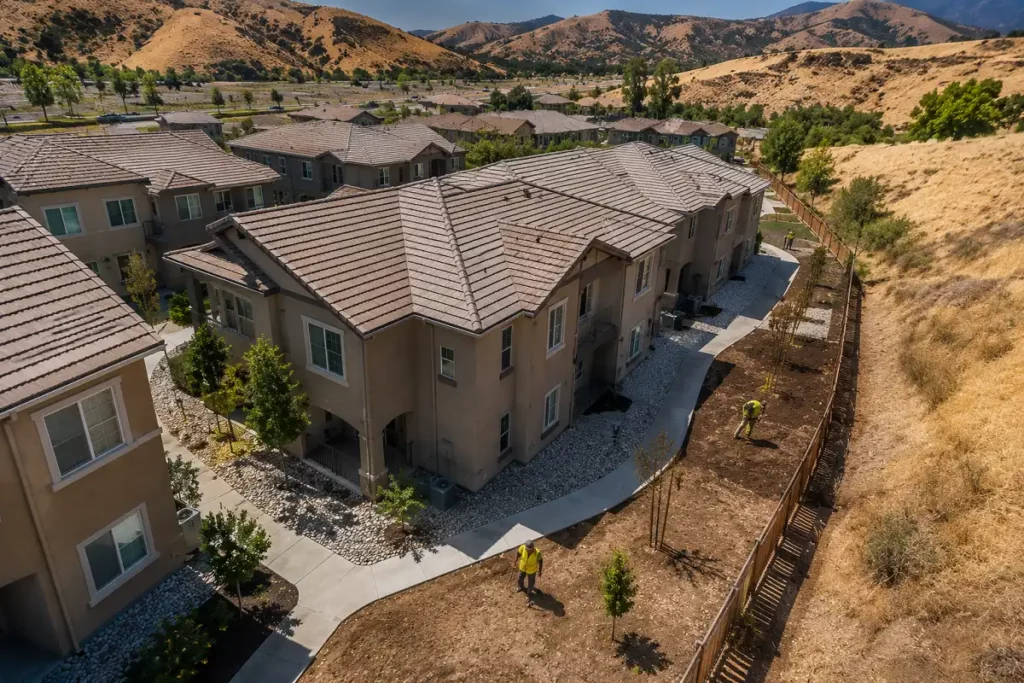
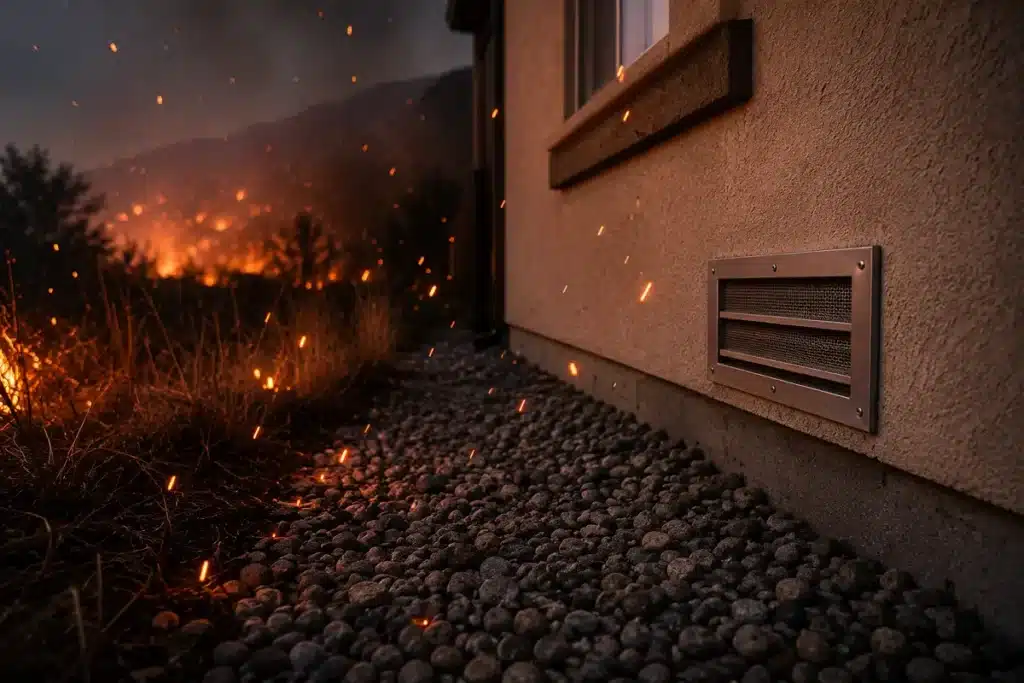
Zone 0 refers to the area within five feet of a structure, often called the ember-resistant zone. It receives the most regulatory attention because research consistently shows that wind-driven embers, not advancing flame fronts, are responsible for most home ignitions during wildfires.
Embers travel ahead of fires, sometimes for more than a mile, and ignite combustible materials wherever they land. Mulch, dry vegetation, patio furniture, wood fencing attachments, leaf debris, and decorative plantings within this five-foot perimeter can all become ignition points.
The CAL FIRE defensible space program identifies Zone 0 as the highest-priority area around any structure. While defensible space has historically focused on vegetation management farther out, Zone 0 shifts attention directly to the building perimeter, which is where most ignitions actually begin.
For HOAs and multi-family properties, this creates a more maintenance-intensive approach to wildfire planning than most communities have dealt with before.
What Changes in 2026: What the Timeline Looks Like
The regulatory foundation for Zone 0 is Assembly Bill 3074 (2020) and SB 504 (2024), which directed California’s Board of Forestry and Fire Protection to establish specific rulemaking for Zone 0. Governor Newsom’s Executive Order N-18-25 required that rulemaking be completed by December 31, 2025.
That work is done. Enforcement, however, is rolling out on a jurisdiction-specific, phased timeline. Here’s what HOAs and property managers should know:
- Properties in Very High Fire Hazard Severity Zones (VHFHSZ) have a compliance target of January 1, 2027
- Properties in High FHSZ have a compliance target of January 1, 2028
- Zone 0 is required immediately for all new construction in designated zones
- In San Diego, Zone 0 enforcement began February 28, 2026, with a phased approach: 2026 is education-focused, 2027 targets the most obvious hazards, and full compliance is expected by 2029
- Starting July 2026, Zone 0 inspections are required during real estate transactions statewide
Enforcement timelines vary by jurisdiction. Communities in higher-hazard zones should be moving now. Non-compliance fines range from $100 to $500 per day per violation, and in some cases, local authorities can contract the remediation work and bill the property owner.
HOAs should also expect that documentation is becoming part of the inspection process. Inspectors are increasingly looking beyond vegetation clearance to evaluate combustible materials near structures, deck transitions, shared fencing, mulch types, roof-edge debris, and exterior storage.
Do HOAs Need to Comply?
In most cases, yes, though specific responsibilities depend on your jurisdiction, governing documents, and ownership boundaries.
HOAs are commonly responsible for shared landscaping, common areas, exterior maintenance in attached communities, and community-wide architectural standards. Some jurisdictions evaluate HOA-managed properties differently from single-family homes, particularly when shared structures or common-area maintenance obligations are involved.
Even though full enforcement hasn’t arrived yet, many HOAs are proactively implementing mitigation measures, driven by insurance pressure, anticipated regulations, resident safety concerns, and risk management considerations.
One underappreciated risk: California insurers can deny wildfire claims if a property was not maintained to defensible space standards at the time of the loss. That’s not just a fine exposure, it’s a coverage exposure. Proactive mitigation changes that calculus.
How Zone 0 Applies to Multi-Family and HOA Properties
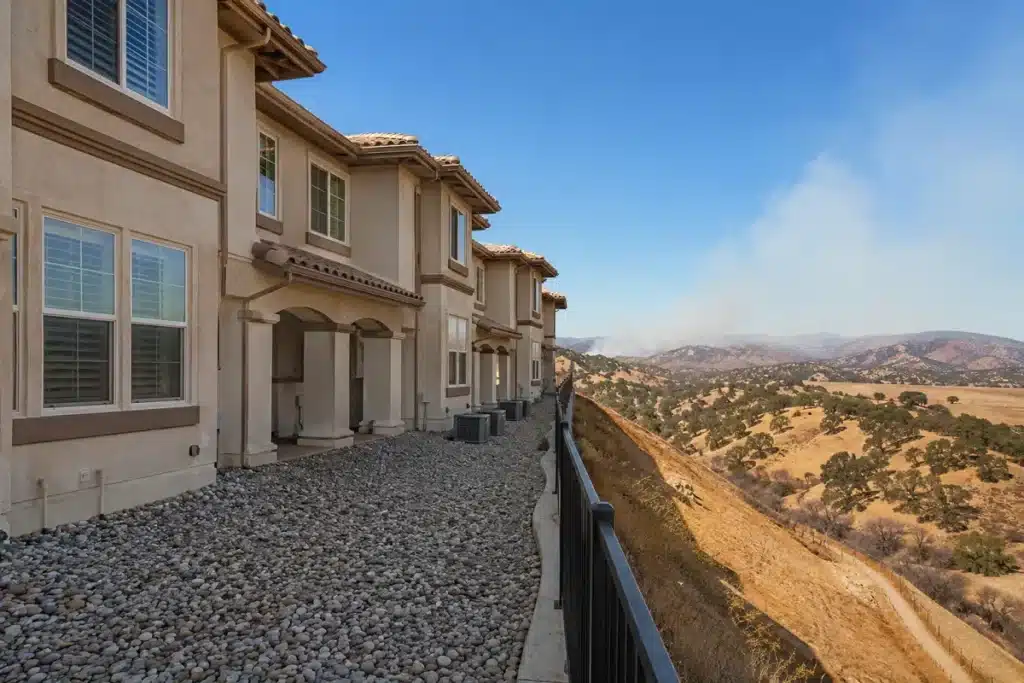
Zone 0 compliance becomes more complex in multi-family communities because wildfire vulnerabilities are structurally interconnected. Unlike detached homes, HOA-managed properties often include shared rooflines, continuous siding systems, common attic spaces, connected fencing, and large landscaped common areas.
This interconnected design means one unaddressed vulnerability can affect multiple units simultaneously.
- A combustible mulch bed near a building corner can threaten several attached units
- Wood fencing attached directly to structures creates ignition pathways between buildings
- Debris accumulation in shared roof valleys can threaten entire structures
Multi-family home hardening, therefore, requires a coordinated, community-wide strategy. Inconsistent maintenance between units creates weak points that undermine broader mitigation efforts and leave HOA boards exposed when inspectors evaluate the property as a whole.
What HOAs Must Address Under Zone 0
The following areas represent the core compliance priorities for HOA-managed communities:
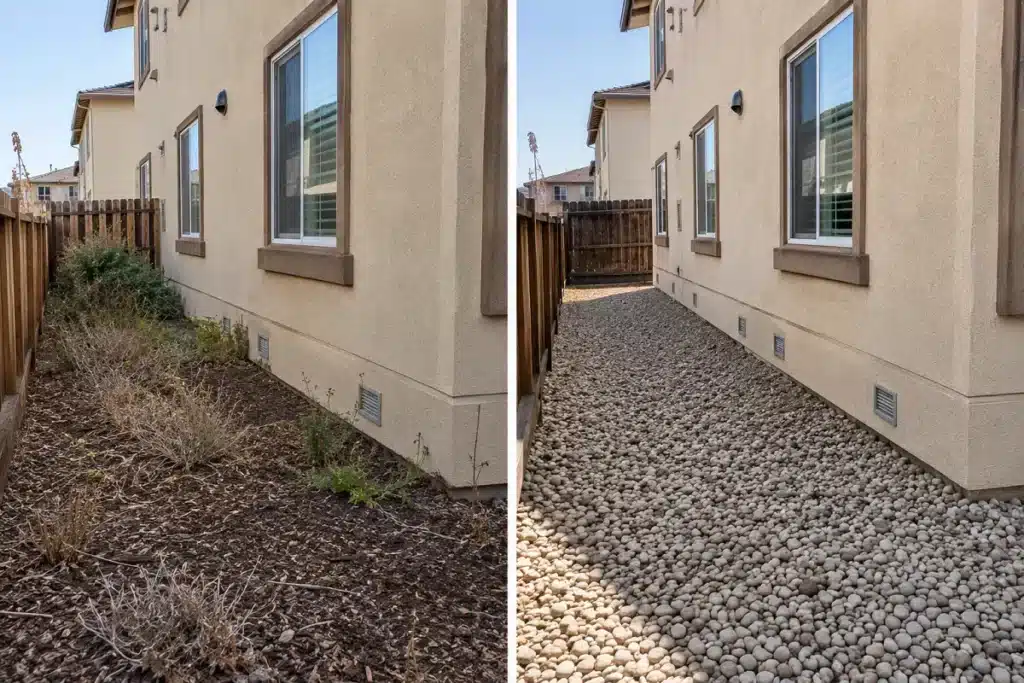
- Noncombustible zone within five feet of all structures (no combustible mulch, wood chips, or bark)
- Removal of dry vegetation and debris adjacent to buildings
- Combustible fencing attached to or within five feet of structures
- Deck-to-home transitions and the underside of elevated decks
- Roof edge, gutter, and valley debris accumulation
- Combustible exterior storage near walls
- Vent and soffit vulnerability assessment
At the community level, HOAs should also review exterior furnishing policies, landscaping standards, irrigation practices, and vendor maintenance schedules. Consistency across the entire property typically matters as much as individual improvements.
For a comprehensive breakdown of home-level vulnerabilities that extend beyond Zone 0, Firestorm’s ultimate wildfire protection guide covers the full picture from ember-resistant vents to roofline hardening.
Who Is Responsible: HOA or Homeowner?
This depends on the property ownership structure and governing documents. As a general framework:
- HOAs are typically responsible for common areas and shared systems
- Homeowners are typically responsible for exclusive-use areas
- Some areas—patios, entry landscaping, attached fencing, shared decks—may involve overlapping responsibility
Because these boundaries can be confusing, many communities benefit from explicitly documenting maintenance obligations, inspection procedures, resident compliance expectations, and enforcement timelines. Clear communication prevents the kind of gaps that tend to show up on inspection day.
Turning Compliance Into a Community Advantage
Communities that get ahead of Zone 0 requirements tend to gain advantages beyond passing inspections.
Some insurers now offer premium discounts of 10–15% for properties that can document compliance with AB 3074 Zone 0. Proactive mitigation may also improve underwriting outcomes in markets where wildfire exposure is driving carriers to restrict or exit coverage altogether.
From a marketability standpoint, buyers in wildfire-prone areas are increasingly evaluating whether communities appear prepared. Well-documented mitigation efforts—visible hardening, maintenance records, a clear compliance plan—can differentiate a community in a competitive or risk-sensitive market.
How to Implement Zone 0 Across Multi-Family Communities
Large communities require a structured approach. One-time cleanup projects don’t sustain compliance. Here’s how to build a repeatable system:
Step 1: Conduct a Community-Wide Site Assessment
Identify high-risk ignition areas, combustible landscaping zones, roofline and gutter vulnerabilities, fence connections to structures, and vent and soffit exposures. Many HOAs work with wildfire mitigation professionals to prioritize the highest-risk areas first.
Step 2: Phase Mitigation Projects
Not everything needs to happen at once. Communities commonly phase projects by building age, wildfire exposure level, inspection urgency, and budget availability. Phased implementation makes community-wide mitigation financially and operationally manageable.
Step 3: Coordinate Vendors
Large-scale mitigation typically involves landscaping vendors, roofing contractors, maintenance staff, and fire mitigation specialists working in sequence. Clear scheduling reduces resident disruption and improves consistency across the property.
Step 4: Establish Ongoing Maintenance Standards
Zone 0 compliance is not a one-time project. HOAs should establish recurring schedules for vegetation trimming, gutter cleaning, debris removal, fence inspections, and common-area walkthroughs. Long-term consistency is the difference between communities that pass inspections and communities that create liability.
Step 5: Maintain Centralized Documentation
Documentation supports insurance discussions, demonstrates mitigation efforts to inspectors, and reduces liability exposure. Maintain inspection reports, before-and-after photos, vendor invoices, and maintenance schedules in a centralized record.
Cost Planning and Budget Strategy
Wildfire mitigation planning requires separating immediate capital costs from ongoing maintenance expenses:
- Capital improvements (CapEx): vent upgrades, fencing replacement, structural hardening
- Ongoing operational costs: landscaping maintenance, gutter cleaning, debris removal
Phased budgeting allows communities to spread capital costs over multiple years while prioritizing the highest-risk vulnerabilities first. From a risk management perspective, proactive mitigation also reduces the cost exposure associated with inspection failures, insurance complications, and emergency repairs.
Zone 0 Within a Complete Wildfire Strategy
Zone 0 is the starting point, not the complete solution. Effective multi-family home hardening also considers:
- Ember-resistant vent installation: EmberVent™ fire-resistant vents
- Vent and soffit mesh protection: EmberMesh™
- Gutter ember and debris management: Fire-resistant vents
- Defensible space beyond five feet: California wildfire home hardening and defensible space
Wildfire resilience works best when communities address vulnerabilities systematically across all zones and structural elements, not just the five feet closest to the building. For additional resources, check out our FAIR Plan blog and our AB 38 inspection guide.
Conclusion
California Zone 0 defensible space requirements represent a meaningful shift in what wildfire compliance looks like for HOAs. Regulations are in place, enforcement timelines are firming up, and the financial consequences of delay—fines, claim denials, insurance complications—are real.
The communities best positioned for what’s ahead are the ones building compliance systems now: site assessments, phased mitigation, vendor coordination, documentation, and ongoing maintenance standards. That’s not just regulatory positioning, it’s risk management.
Most Zone 0 vulnerabilities are identifiable and addressable when caught early. Starting now reduces future costs, improves inspection readiness, and builds the kind of documented mitigation record that benefits communities at renewal, sale, and beyond.

